
Rabbit Resistant Plants

Rabbits can be a major nuisance in gardens, munching on flowers, vegetables, and shrubs. While fencing and deterrents can help, planting rabbit-resistant species is a natural way to keep them at bay. Many plants have strong scents, bitter tastes, or tough textures that rabbits tend to avoid.
By choosing plants that are naturally unappealing to rabbits, you can enjoy a thriving garden without constant damage. These plants are not only resistant to nibbling but also bring beauty, texture, and pollinator-friendly benefits to outdoor spaces. Below are rabbit-resistant plants to help protect your garden.
1. Lavender
Lavender is one of the best plants for deterring rabbits due to its strong fragrance. The essential oils in the leaves and flowers create an aroma that rabbits find overwhelming, keeping them away.
This sun-loving perennial thrives in well-drained soil and requires little maintenance. It is drought-tolerant and works well in flower beds, borders, or container gardens.
Lavender not only repels rabbits but also attracts pollinators like bees and butterflies. Its beautiful purple blooms and soothing scent make it a great addition to any garden.
2. Yarrow
Yarrow is a tough, drought-resistant perennial that rabbits tend to avoid. Its slightly bitter taste and feathery, textured leaves make it unappealing to nibblers.
This plant thrives in dry, sunny conditions and requires minimal care. It is often used in wildflower meadows, pollinator gardens, or as a low-maintenance ground cover.
Yarrow blooms in clusters of tiny flowers, attracting butterflies and beneficial insects. It adds a soft, airy texture to flower beds while keeping rabbits away.
3. Russian Sage
Russian sage is another aromatic plant that repels rabbits. Its silvery, fuzzy leaves and tall spiky flowers make it an excellent choice for adding structure to a garden.
This hardy perennial thrives in full sun and poor soil, making it ideal for xeriscaping and drought-prone areas. It pairs well with other heat-tolerant plants like lavender and ornamental grasses.
Russian sage blooms in late summer with lavender-colored flowers that attract pollinators while deterring rabbits. It’s a great option for borders and rock gardens.
4. Foxgloves
Foxgloves are striking biennials or perennials with tall spikes of bell-shaped flowers. They contain toxic compounds that make them unappealing to rabbits and other herbivores.
These plants thrive in partial shade and well-drained soil, adding a dramatic vertical element to gardens. They work well in cottage-style flower beds or woodland settings.
Foxgloves attract hummingbirds and bees, making them a great wildlife-friendly choice. However, they are poisonous if ingested, so care should be taken around pets and children.
5. Alliums
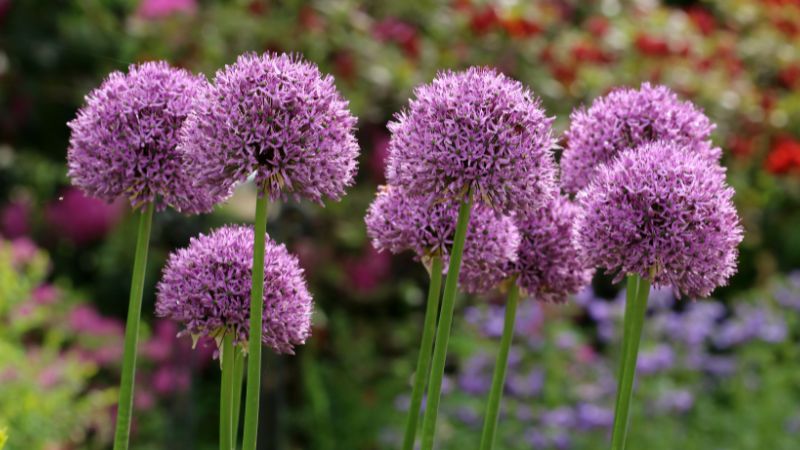
Alliums, which include onions, garlic, and ornamental varieties, have a strong sulfurous scent that rabbits dislike. Their bulbous nature also makes them harder for rabbits to dig up and eat.
These plants thrive in well-drained soil and full sun, producing globe-shaped flowers that add an architectural element to gardens. Their bold colors and unique shape make them a standout in flower beds.
Alliums are an excellent choice for companion planting, as they help protect nearby vegetables and flowers from both rabbits and other pests.
6. Salvia
Salvia, or perennial sage, has aromatic leaves that repel rabbits. The strong scent and slightly fuzzy texture of the foliage make it an unattractive food source.
This hardy perennial thrives in full sun and well-drained soil. It produces spikes of colorful flowers in shades of purple, red, pink, and blue, attracting bees, butterflies, and hummingbirds.
Salvia is an excellent border plant that provides long-lasting blooms while keeping rabbits out of the garden. It is easy to grow and pairs well with other pest-resistant plants.
7. Heuchera (Coral Bells)
Heuchera has thick, slightly hairy leaves that rabbits tend to avoid. Its foliage comes in a variety of colors, from deep burgundy to lime green, adding year-round interest to gardens.
This perennial grows well in shaded or partially sunny areas, making it a great option for woodland gardens or borders. Its bell-shaped flowers attract pollinators without attracting rabbits.
Heuchera is low-maintenance and pairs well with ferns, hostas, and other shade-loving plants. It adds texture and color while remaining rabbit-resistant.
8. Bleeding Heart
Bleeding heart is a shade-loving perennial with delicate, heart-shaped flowers that bloom in spring. Its toxic properties make it unappealing to rabbits, keeping it safe from nibbling.
This plant thrives in moist, well-drained soil and adds a soft, romantic touch to gardens. It works well in woodland settings or as an understory plant beneath trees.
Bleeding heart is a great choice for adding texture and beauty to shaded areas while naturally deterring rabbits. It dies back in summer but returns each year.
9. Ferns
Ferns are another rabbit-resistant option due to their tough, leathery leaves. Most varieties, including ostrich ferns and Japanese painted ferns, are rarely damaged by rabbits.
These plants thrive in shady, moist environments and provide a lush, tropical feel to gardens. Their feathery fronds add movement and texture without attracting pests.
Ferns are excellent companions for hostas, astilbes, and other shade plants. They are easy to grow and require minimal maintenance while keeping rabbits at bay.
10. Snapdragons
Snapdragons are colorful, long-blooming annuals that rabbits generally avoid. Their slightly bitter taste and sturdy stems make them less appealing as a food source.
These flowers thrive in full sun and well-drained soil, blooming in shades of pink, red, yellow, and white. They are often used in borders, containers, or cottage gardens.
Snapdragons attract pollinators like bees and butterflies while adding vibrant color to the garden. They are a great choice for seasonal planting in areas prone to rabbit damage.