Global Crop Yield Volatility: Causes & Impact (2026 Update)

Farmers, policymakers, and food systems analysts around the world are increasingly confronted with the challenge of crop yield volatility—the unpredictable swings in agricultural output driven by a complex web of environmental, economic, and biological forces. These fluctuations ripple far beyond the farm gate, threatening food security, disrupting commodity markets, and undermining the financial stability of rural communities across every continent. Understanding the root causes and cascading effects of this volatility has never been more urgent for those working to build a resilient global food supply.
From the rain-fed smallholder plots of sub-Saharan Africa to the vast irrigated plains of North America, no agricultural system is entirely immune to the forces that destabilize harvests. Climate change adaptation has become a central concern for agronomists and farm planners alike, as shifting weather patterns compound the already formidable challenges posed by soil degradation, pest pressure, and volatile input costs. This guide examines the full spectrum of factors driving yield instability and explores the strategies that offer the most credible pathways toward greater agricultural stability.
Understanding Crop Yield Volatility in Modern Agriculture
At its core, crop yield volatility refers to the degree of variation in agricultural output from one season or year to the next, measured at field, regional, or national scales. It is distinct from a long-term yield trend and instead captures the unpredictability that makes farm planning and food policy so difficult.
Volatility can be measured statistically through coefficients of variation, standard deviations around trend lines, or more sophisticated econometric models. The higher the variance around a mean yield, the greater the systemic risk for farmers, food processors, and governments that depend on stable supply.
Modern agriculture has introduced both new sources of volatility and new tools to manage it. The interplay between these forces shapes the risk landscape that every producer navigates each growing season.
Primary Drivers of Yield Fluctuations
Yield fluctuations stem from a diverse set of interacting drivers, rarely operating in isolation. Weather events, input availability, pest outbreaks, and market signals all converge to determine what a farmer ultimately harvests.
Soil health is a foundational but often overlooked driver. Degraded soils with poor water retention or low organic matter amplify the impact of drought or flood events, turning moderate weather anomalies into severe yield losses.
Input cost shocks—such as sudden spikes in fertilizer or fuel prices—can cause farmers to under-apply nutrients or delay critical operations, directly suppressing yields. This economic-agronomic feedback loop is one of the most underappreciated sources of volatility in lower-income farming systems.
Climate Change and Environmental Stress Factors
Climate change is now widely recognized as a primary amplifier of yield instability, intensifying both the frequency and severity of extreme weather events. Seasonal shift data from environmental agencies confirm that growing seasons are becoming less predictable in many regions, disrupting planting calendars that farmers have relied on for generations.
Heat stress during critical reproductive stages—such as flowering or grain fill—can devastate yields even when overall rainfall is adequate. A single heat event lasting just a few days at the wrong phenological moment can reduce cereal yields by 10 to 25 percent.
IPCC assessments on land use and climate confirm that compounding stressors, including drought followed by intense rainfall, are becoming more common and more damaging to agricultural systems worldwide. Adaptation is no longer optional—it is a survival imperative for farming communities in vulnerable regions.
Geographic and Regional Volatility Patterns
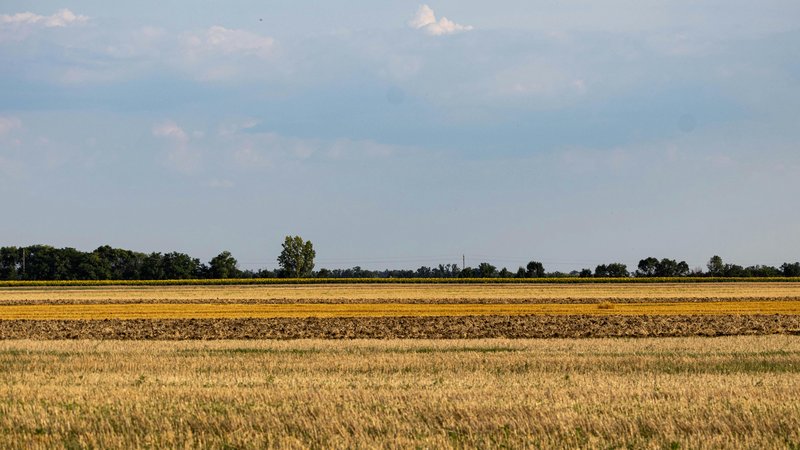
Yield volatility is not distributed evenly across the globe. Arid and semi-arid regions, particularly those relying on rainfed agriculture, consistently experience higher interannual variability than irrigated or humid temperate zones.
Sub-Saharan Africa and South Asia display some of the highest volatility coefficients globally, largely because smallholder farmers in these regions have limited access to irrigation, improved seed varieties, and crop insurance. A single poor monsoon season can erase an entire year’s food supply for millions of households.
Even within wealthy agricultural nations, regional disparities are stark. Dryland wheat belts in Australia or the Great Plains of North America can swing dramatically between bumper crops and near-total failures within consecutive growing seasons.
Volatility Differences Between Developed and Emerging Agricultural Regions
Developed agricultural economies generally have more institutional buffers—insurance programs, futures markets, government support payments, and advanced infrastructure—that dampen the income impact of yield swings. Emerging economies often lack these cushions, making yield volatility far more destabilizing at the household level.
Policy evolution has been notable in many developing nations. Farm Europe research shows that developing countries have generally evolved from taxing their agricultural sector in the 1990s to providing significant levels of support to their farmers, a shift that has meaningfully improved resilience in some regions.
Despite this progress, the structural gap between high-income and low-income agricultural systems remains wide. Bridging that gap requires sustained investment in rural infrastructure, market access, and farmer education alongside policy reform.
Crop Genetics and Selective Breeding for Stability
One of the most durable strategies for reducing yield volatility is the development of crop varieties with built-in stress tolerance. Drought-resistant maize, flood-tolerant rice, and heat-stable wheat cultivars have already demonstrated their value in field trials and commercial deployment across multiple continents.
Advances in biotechnology are accelerating this work significantly. Gene editing tools like CRISPR complement selective breeding by allowing even more precise introduction of beneficial genetic traits, enabling breeders to target stress-response pathways with unprecedented accuracy.
The pipeline of climate-adapted varieties is expanding rapidly, but translating laboratory breakthroughs into seeds that farmers can access and afford remains a persistent challenge, particularly in lower-income agricultural regions.
Technology and Precision Agriculture Solutions
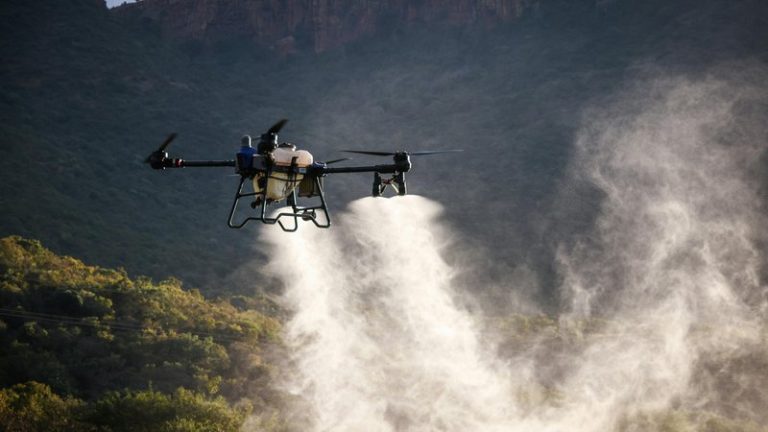
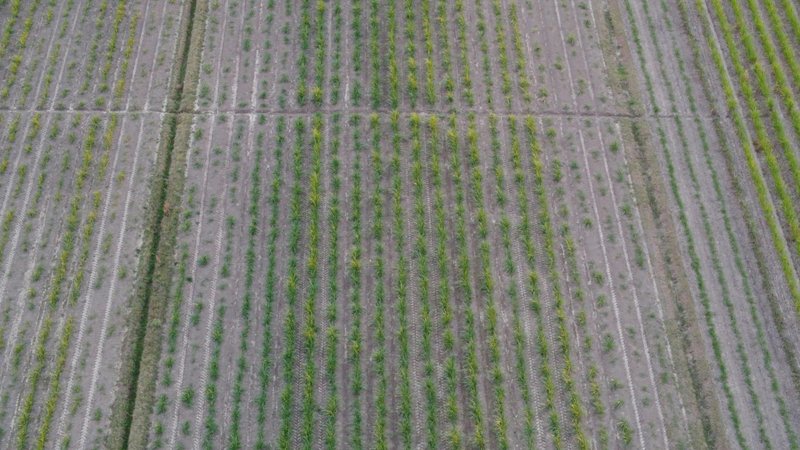
Precision agriculture technologies—including variable-rate fertilizer application, GPS-guided machinery, and drone-based crop scouting—allow farmers to optimize inputs at a sub-field level, reducing waste and buffering against localized stress events.
Farms that adopt precision nutrient management consistently report lower yield variance compared to those using uniform application rates, because inputs are matched more closely to actual crop needs across heterogeneous field conditions.
The role of AI in agriculture is expanding rapidly, with machine learning models now capable of predicting yield outcomes weeks before harvest based on satellite imagery, weather data, and historical field records. These tools are transforming how risk is assessed and managed at the farm level.
Real-Time Monitoring Systems and Early Warning Mechanisms
Early warning systems that integrate satellite remote sensing, weather station networks, and crop growth models can alert farmers and governments to emerging yield threats weeks or even months in advance. This lead time is critical for triggering interventions before losses become irreversible.
National and international platforms—including FAO’s agricultural monitoring services—now provide near-real-time crop condition assessments for major producing regions worldwide. FAO data on global food systems underscores the importance of timely information for both market stability and humanitarian response planning.
At the farm level, soil moisture sensors and microclimate weather stations are becoming more affordable, enabling even smallholder producers to access localized data that supports better irrigation and planting decisions.
Price Volatility and Market Dynamics
Yield volatility and price volatility are deeply intertwined. When a major producing region experiences a significant shortfall, global commodity prices can spike sharply, triggering food inflation that disproportionately affects low-income consumers and import-dependent nations.
Speculative trading activity in commodity futures markets can amplify price signals beyond what underlying supply-demand fundamentals would justify. This financial amplification effect means that even moderate yield shortfalls can produce outsized price movements in globally traded commodities like wheat, maize, and soybeans.
Export restrictions imposed by major producing countries during supply crunches further distort global markets, reducing the price-stabilizing function that international trade is supposed to provide.
Impact on Farmer Livelihoods and Income Stability
For individual farming households, yield volatility translates directly into income instability—a reality that affects decisions about investment, education, and long-term farm viability. A poor harvest year can force families into debt cycles that take multiple seasons to escape.
Income volatility also discourages on-farm investment. When farmers cannot predict their revenue with reasonable confidence, they are less likely to adopt improved inputs, build infrastructure, or expand their operations—creating a volatility trap that perpetuates low productivity.
Social safety nets and income support programs play a critical role in breaking this cycle, particularly for smallholder farmers in developing regions who lack access to formal financial services.
Agricultural Credit and Farm Financing Challenges
Lenders and financial institutions view yield volatility as a core credit risk when evaluating farm loan applications. High volatility environments lead to tighter credit conditions, higher interest rates, and reduced access to capital for farmers who need it most.
Agricultural microfinance institutions have developed specialized lending products that account for seasonal income patterns, but coverage remains thin in many of the world’s most volatile farming regions. Expanding access to appropriate financial products is essential for building farm-level resilience.
Innovative financing mechanisms—including weather-indexed loans that automatically adjust repayment schedules following verified weather events—are gaining traction as practical tools for managing credit risk in climate-exposed agricultural systems.
Crop Insurance and Risk Modeling Approaches
Crop insurance is one of the most widely used tools for transferring yield risk away from individual farmers and onto insurance pools or government programs. Indemnity-based policies that pay out based on actual yield losses have been the traditional model, but they are expensive to administer and prone to moral hazard.
Index-based insurance—which pays out when a measurable index such as rainfall or temperature crosses a predefined threshold—offers a lower-cost alternative that can be scaled more easily in developing markets. Basis risk, the mismatch between index triggers and actual farm losses, remains the primary technical challenge for index insurance products.
Advances in satellite-derived vegetation indices and machine learning-based yield prediction are improving the accuracy of index products, gradually narrowing the basis risk gap and making these tools more attractive to farmers and insurers alike.
Food Security Implications
Persistent yield volatility poses a direct threat to global food security, particularly for the billions of people who spend a large share of their income on food and have little capacity to absorb price shocks. When staple crop yields falter in major producing regions, the consequences cascade through import-dependent nations almost immediately.
Strategic grain reserves maintained by national governments and international bodies serve as a critical buffer, but their effectiveness depends on adequate stock levels and coordinated release policies. Many low-income countries currently hold reserves well below internationally recommended thresholds, leaving their populations exposed to supply disruptions.
Dietary diversification at the household and national level also reduces vulnerability to volatility in any single crop. Dependence on a narrow set of staple crops amplifies the food security impact of localized yield failures.
Volatility in Specialty and Niche Crops
Specialty crops—including fruits, vegetables, nuts, and spices—often exhibit even higher yield volatility than staple grains, due to their greater sensitivity to weather extremes, pest pressure, and labor availability. A late frost can destroy an entire stone fruit harvest; a single pest outbreak can devastate a spice crop.
Price volatility in specialty crop markets tends to be more pronounced because these commodities are less frequently traded on organized futures markets, reducing the price discovery and risk transfer functions that benefit staple grain producers.
Growers of specialty crops often rely on long-term contracts with processors or retailers as a primary risk management tool, locking in prices in exchange for supply commitments that provide revenue certainty across volatile seasons.
Organic Versus Conventional Farming System Resilience
The relative yield stability of organic versus conventional farming systems is a subject of active research and considerable debate. Organic systems generally exhibit lower average yields but may demonstrate greater resilience under certain stress conditions, particularly drought, due to higher soil organic matter and improved water retention.
Conventional systems with access to synthetic inputs and improved seed varieties typically achieve higher average yields but can be more vulnerable to input supply disruptions or price shocks that affect fertilizer and pesticide availability.
Integrated farming approaches that combine the soil health benefits of organic practices with targeted use of precision inputs are increasingly recognized as offering the best balance of productivity and resilience across a range of environmental conditions.
Post-Harvest Loss Correlation with Yield Volatility
Post-harvest losses—the food that is produced but never reaches consumers due to spoilage, poor storage, or transport failures—effectively amplify the impact of yield volatility by reducing the usable supply below what field-level production figures suggest.
In many developing regions, post-harvest losses for perishable crops can exceed 30 to 40 percent of production, meaning that even a technically adequate harvest may translate into effective food shortages at the market level. Reducing post-harvest losses is one of the highest-return investments available for improving food security without expanding cultivated area.
Improved storage infrastructure, cold chain development, and farmer training in post-harvest handling practices are all proven interventions that can meaningfully reduce this hidden source of supply volatility.
Global Supply Chain Cascades and Regional Effects
Modern agricultural supply chains are deeply interconnected, meaning that yield shocks in one region can rapidly propagate through processing, logistics, and retail networks to affect food availability and prices thousands of miles away. The concentration of global grain trade among a small number of major exporters amplifies this transmission effect.
Port congestion, shipping cost spikes, and trade policy responses—such as export bans—can transform a regional production shortfall into a global supply crisis within weeks. The fragility of just-in-time supply chains, optimized for efficiency rather than resilience, has been exposed repeatedly by recent weather and geopolitical shocks.
Building redundancy into supply chains through diversified sourcing, strategic stockpiling, and regional trade agreements is increasingly recognized as a necessary counterweight to the efficiency-driven concentration that has characterized global food trade in recent decades.
Behavioral Economics of Farmer Decision-Making
How farmers perceive and respond to yield risk is not always consistent with classical economic rationality. Behavioral factors—including loss aversion, status quo bias, and limited cognitive bandwidth—often lead to suboptimal risk management choices, even when better options are available and affordable.
Farmers who have experienced a sequence of good years may systematically underestimate the probability of a severe loss event, leading to under-investment in insurance and risk mitigation measures. This recency bias is well documented in agricultural decision-making research.
Extension services and farmer advisory programs that incorporate behavioral insights into their communication strategies have demonstrated measurably higher uptake of risk management tools compared to conventional information-only approaches.
Risk Management Strategies for Agricultural Operations
Effective farm-level risk management typically involves layering multiple complementary strategies rather than relying on any single tool. Crop diversification, forward contracting, insurance, and on-farm reserves all serve distinct but reinforcing roles in a comprehensive risk management portfolio.
Geographic diversification of production—operating fields in multiple agro-climatic zones—can significantly reduce the correlation of yield outcomes across a farming operation, smoothing overall revenue even when individual fields suffer losses.
At the policy level, well-designed safety net programs that provide countercyclical income support during severe yield shortfalls complement private risk management tools and ensure that even farmers with limited resources have a meaningful floor below their income.
Future Outlook and Adaptation Pathways
The trajectory of global crop yield volatility will be shaped by the pace of climate change, the speed of technological adoption, and the quality of agricultural policy frameworks developed in the coming years. The fundamental challenge is that the risk environment is intensifying faster than many farming systems are adapting.
Investment in climate-resilient infrastructure—including irrigation systems, rural roads, and grain storage facilities—alongside accelerated deployment of stress-tolerant crop varieties will be essential for keeping pace with a more volatile climate. The countries and farming systems that invest most aggressively in adaptation today will face the lowest volatility penalties tomorrow.
International cooperation on data sharing, technology transfer, and trade policy reform will also be critical. Yield volatility is a global challenge that no single country can solve in isolation, and the most effective adaptation pathways will be those built on shared knowledge, coordinated policy, and sustained commitment to agricultural resilience for every farming community on earth.