IoT in Agriculture: Smart Farming Solutions

The rise of IoT in agriculture marks one of the most significant shifts in how humanity grows food. Connected sensors, automated systems, and real-time data streams are replacing guesswork with precision, giving farmers the tools to make smarter decisions at every stage of the growing cycle. From small family operations to large commercial enterprises, the technology is reshaping what modern farming looks like from the ground up.
What makes this transformation so compelling is its breadth. AI in agriculture and connected device ecosystems are converging to create systems that monitor, predict, and act with minimal human intervention. The stakes are high — global food demand continues to climb while arable land and water supplies face mounting pressure. Smart farming technology is no longer a futuristic concept; it is an operational reality for millions of producers worldwide.
Understanding IoT Technology in Modern Agriculture
IoT in farming refers to a network of physical devices embedded with sensors, software, and connectivity tools that collect and exchange data across a farm ecosystem. These devices communicate with cloud platforms, enabling farmers to monitor conditions remotely and respond instantly.
The architecture typically involves edge devices, gateways, and cloud-based analytics platforms. AI and IoT together create feedback loops that continuously improve decision-making over time.
Precision Farming and Real-Time Crop Monitoring
Precision farming uses location-specific data to manage crops at a granular level, reducing waste and maximizing output per acre. Sensors placed throughout a field relay live readings on temperature, humidity, light intensity, and plant stress indicators.
Precision agriculture research demonstrates that variable-rate application of inputs — fertilizers, pesticides, water — can dramatically cut costs while maintaining or improving yields. Farmers who adopt precision monitoring consistently report reductions in input waste of 15% to 20% or more.
IoT Sensors and Data Collection Systems
Sensors are the foundational layer of any agricultural IoT deployment. They measure everything from soil moisture and pH to leaf wetness and canopy temperature, feeding continuous streams of data into centralized dashboards.
Modern sensor arrays are increasingly affordable and durable, designed to withstand harsh outdoor conditions. Recent sensor studies highlight advances in low-power, wide-area network (LPWAN) connectivity that extend battery life while maintaining reliable data transmission across large fields.
Water Management and Irrigation Automation
Water scarcity is one of the most pressing challenges in global food production, and smart irrigation systems are among the most impactful IoT applications in the field. Soil moisture sensors trigger irrigation only when and where it is needed, eliminating over-watering.
Sensor-based irrigation has shown the potential to reduce agricultural water consumption significantly, particularly in drought-prone regions. Automated drip and sprinkler systems controlled by IoT platforms can respond to real-time weather data, adjusting schedules dynamically.
Livestock Monitoring and Animal Welfare
Smart collars, ear tags, and implantable sensors track the health, location, movement, and reproductive cycles of individual animals. Farmers receive alerts when an animal shows signs of illness, distress, or is approaching calving.
Early detection of disease in livestock through wearable IoT devices can reduce veterinary costs and prevent herd-wide outbreaks. Real-time location tracking also reduces losses from theft and straying in open-range operations.
Pest Detection and Disease Management
IoT-enabled traps, cameras, and acoustic sensors can identify pest activity before it reaches economically damaging thresholds. Machine vision systems analyze leaf images to flag early signs of fungal, bacterial, or viral infections.
Spectral index research shows that certain light wavelength signatures can reveal plant disease stress before visible symptoms appear, enabling targeted intervention rather than blanket chemical application.
Drones and Unmanned Aerial Vehicles in Farming
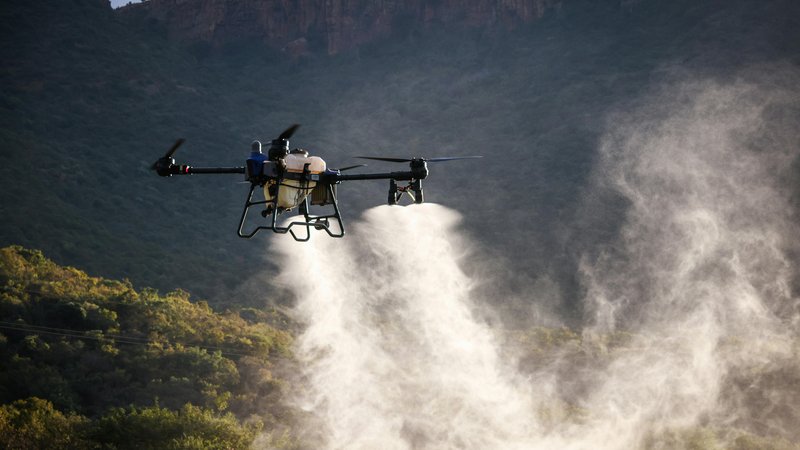
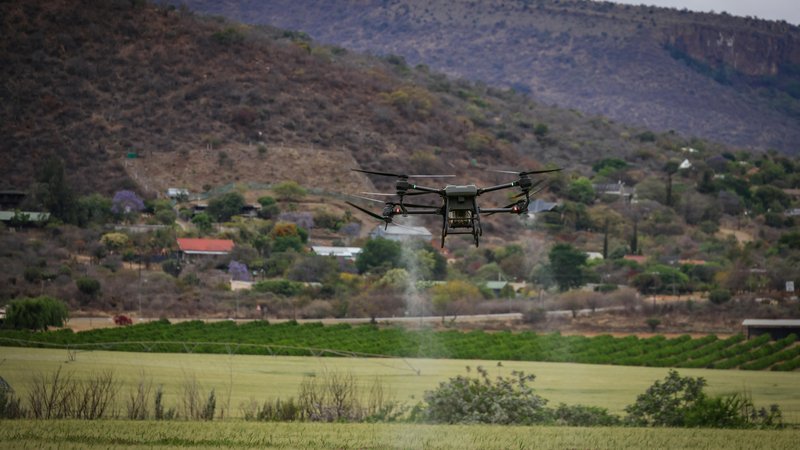
Agricultural drones equipped with multispectral cameras survey large land areas in a fraction of the time required for ground-based scouting. They generate detailed maps of crop health, soil variability, and irrigation coverage.
Beyond scouting, drones are increasingly used for precision spraying, seeding, and pollination support. UAV-based crop spraying can reduce chemical usage by up to 30% compared to conventional methods by targeting only affected zones.
Soil Health and Nutrient Optimization
Soil sensors continuously measure nitrogen, phosphorus, potassium, and organic matter levels, giving farmers a dynamic picture of nutrient availability across their fields. This data drives variable-rate fertilizer application, preventing both deficiency and excess.
Healthy soil biology is the foundation of sustainable yields. Soil monitoring research confirms that real-time nutrient tracking paired with smart application systems improves long-term soil structure while cutting input costs.
Machine Learning and AI Integration for Agricultural Intelligence
Raw sensor data becomes actionable intelligence only when processed through sophisticated analytical models. Machine learning algorithms identify patterns in historical and live data to generate predictive recommendations for planting, harvesting, and input management.
The convergence of AI and connected devices is explored in depth in our guide on AI in crop management, which outlines how these systems are moving from experimental to essential. Predictive models trained on multi-season datasets can forecast yield outcomes weeks before harvest with high accuracy.
Yield Optimization Through Smart Technology
Every data point collected across a growing season contributes to a clearer picture of what drives yield outcomes on a specific farm. IoT platforms aggregate this data and surface recommendations that are tailored to local conditions rather than generic best practices.
Yield optimization is not just about maximizing output — it is about maximizing output per unit of resource consumed. Smart technology helps farmers achieve more with less water, fewer chemicals, and reduced labor hours.
Environmental Sustainability and Carbon Tracking
Agricultural IoT platforms increasingly include carbon accounting tools that measure emissions from soil, machinery, and livestock. This data supports compliance with carbon credit schemes and sustainability reporting requirements.
Reducing the environmental footprint of food production is both an ethical imperative and a growing market requirement. Smart systems that track and minimize emissions give farmers a competitive edge in markets that reward verified sustainability credentials.
Smart Greenhouse Operations
Greenhouses are ideal environments for IoT deployment because their controlled conditions allow for highly precise management of temperature, humidity, CO₂ levels, and light. Automated climate control systems respond to sensor readings in real time, maintaining optimal growing conditions around the clock.
Fully automated smart greenhouses can increase crop yields by 20% to 25% compared to manually managed facilities while simultaneously reducing energy consumption through intelligent climate scheduling.
Remote Sensing Technologies for Farm Management
Satellite imagery combined with ground-level IoT data creates a multi-layered view of farm conditions that no single technology could provide alone. Remote sensing platforms deliver field-level insights on vegetation health, water stress, and soil temperature at scale.
These tools are particularly valuable for large operations spanning thousands of acres, where physical scouting is logistically impractical. Integration with farm management software allows remote sensing data to trigger automated responses across connected systems.
Agricultural Robotics and Automation Systems
Robotic systems guided by IoT sensor networks are performing tasks once exclusive to human labor — weeding, thinning, harvesting, and sorting. These machines operate continuously, reduce crop damage through precision handling, and generate operational data with every cycle.
The labor shortage affecting agriculture in many regions is accelerating adoption of robotic automation. Autonomous harvest robots equipped with computer vision can identify and pick ripe produce with accuracy rates exceeding 90% in controlled trials.
Weather Pattern Monitoring and Climate Adaptation
Hyperlocal weather stations integrated into farm IoT networks provide data that national meteorological services cannot match in resolution. Farmers receive field-specific forecasts and alerts for frost, heat stress, and severe weather events.
Climate adaptation strategies depend on granular, reliable weather data. IoT-connected weather monitoring allows farmers to adjust planting schedules, activate protective systems, and manage irrigation in direct response to incoming conditions.
Cost-Benefit Analysis for Small-Scale Farmers
The economic case for IoT adoption varies significantly by farm size, crop type, and available infrastructure. For smallholder farmers, upfront hardware and connectivity costs can be prohibitive without access to financing or subsidy programs.
Agricultural cost-benefit guidance from development finance institutions highlights that long-term value creation in smallholder contexts requires sustained commitment to trust-building and complementary infrastructure — not just technology deployment. Returns on IoT investment typically materialize over multiple growing seasons rather than immediately.
Cybersecurity and Data Privacy in Agricultural IoT
As farms become more connected, they also become more vulnerable. Unauthorized breaches and cyber-attacks on data collected from IoT devices and sensitive information represent a growing threat that the agricultural sector is only beginning to address systematically.
Research on agricultural IoT security underscores that the integration of AI and connected devices has introduced significant privacy risks alongside its operational benefits. Farmers and platform providers must adopt end-to-end encryption, regular firmware updates, and access control protocols as standard practice.
Addressing the Digital Divide in Developing Regions
The benefits of agricultural IoT are not evenly distributed. Farmers in low-income regions often lack the connectivity infrastructure, technical literacy, and capital access needed to deploy and maintain smart farming systems.
Bridging this divide requires targeted investment in rural broadband, affordable hardware, and locally adapted training programs. Development organizations and governments play a critical role in creating the enabling conditions for equitable technology access.
Legacy Equipment Integration and Compatibility
Most farms operate with a mix of old and new equipment, and integrating IoT systems with legacy machinery is one of the most common practical challenges. Retrofit sensor kits and universal communication protocols are expanding the compatibility landscape.
Manufacturers increasingly offer aftermarket IoT modules designed to work with tractors, combines, and irrigation systems that predate the smart farming era. Retrofit solutions can extend the useful life of existing equipment while unlocking data-driven operational benefits.
Regulatory Compliance and Standards
Agricultural IoT deployments must navigate an evolving landscape of data protection laws, spectrum regulations, and food safety standards. Compliance requirements vary significantly by country and crop category, adding complexity to cross-border platform deployment.
Industry bodies and government agencies are working toward harmonized standards that would simplify compliance and encourage broader adoption. Clear regulatory frameworks also provide the certainty that investors need to fund large-scale smart farming infrastructure.
Farmer Training and Technical Skill Development
Technology is only as effective as the people using it. Farmer training programs that build practical skills in data interpretation, device maintenance, and platform navigation are essential for realizing the full value of IoT investments.
Extension services that combine hands-on training with ongoing technical support consistently produce better adoption outcomes than one-time deployment assistance. Peer learning networks among farmers who have successfully integrated IoT tools also accelerate skill transfer.
Blockchain for Supply Chain Transparency
Blockchain technology paired with IoT sensors creates an immutable record of a product’s journey from field to consumer. Every handling event, temperature reading, and location checkpoint is logged in a tamper-proof ledger.
This level of traceability supports food safety recalls, verifies organic and fair-trade certifications, and builds consumer trust. Blockchain-enabled supply chain transparency is becoming a competitive differentiator in premium food markets.
Edge AI and Connectivity Solutions
Edge AI processes data locally on the device rather than sending it to a distant cloud server, reducing latency and enabling real-time decisions even in areas with limited internet connectivity. This is particularly valuable in remote farming regions.
Edge computing research in agricultural contexts demonstrates that on-device inference can deliver actionable insights within milliseconds, enabling automated responses to rapidly changing field conditions without cloud dependency.
Ethical Considerations in Autonomous Farming
The displacement of farm labor by autonomous systems raises legitimate questions about rural employment, community stability, and the distribution of technology’s economic benefits. These are not peripheral concerns — they are central to responsible innovation.
Ethical deployment of autonomous farming technology requires active engagement with affected communities, transparent benefit-sharing arrangements, and investment in workforce transition programs. Technology developers and policymakers share responsibility for these outcomes.
Interoperability Standards Across IoT Platforms
One of the most persistent barriers to smart farming adoption is the fragmentation of IoT platforms. Devices from different manufacturers often cannot communicate with each other, forcing farmers into proprietary ecosystems.
Open standards initiatives such as FIWARE and AgGateway are working to establish common data formats and communication protocols. True interoperability would allow farmers to mix and match best-in-class devices without compatibility penalties.
Food Security and Supply Chain Tracking
IoT-enabled supply chain tracking reduces post-harvest losses by monitoring storage conditions and flagging spoilage risks before they cascade through distribution networks. Real-time visibility across the supply chain helps match supply with demand more efficiently.
IoT agriculture market analysis points to food security applications as one of the fastest-growing segments driving investment in connected farming infrastructure globally. Reducing food loss between farm and table is as important as increasing production.
The Future of Smart Farming Technology
The trajectory of agricultural IoT points toward increasingly autonomous, self-optimizing farm systems that require less manual intervention while delivering more precise outcomes. Advances in sensor miniaturization, satellite connectivity, and AI model efficiency are accelerating this evolution.
What remains constant is the underlying goal: producing more food, more sustainably, for a growing global population. The farmers and organizations that invest in understanding and deploying these tools thoughtfully — not just technologically, but socially and ethically — will be best positioned to lead that effort. Smart farming is not a destination but a continuous process of learning, adapting, and improving how we work with the land.