AI in Agriculture Market: Growth & Penetration (2026 Update)

The AI in agriculture market is undergoing one of the most significant transformations in the history of food production. From autonomous field robots to predictive crop analytics, artificial intelligence is no longer a distant concept for farmers — it is an operational reality reshaping how land is managed, how resources are allocated, and how yields are maximized across every major agricultural region in the world.
Understanding where this market stands today — and where it is heading — requires looking at the technologies driving adoption, the economic forces creating barriers, and the policy environments either accelerating or slowing progress. Whether you are a large-scale commercial operator, a smallholder farmer, or an agri-tech investor, the dynamics explored in this guide directly affect your decisions. For a broader look at the benefits and risks involved, the AI in agriculture landscape offers essential context.
Market Size and Growth Trajectory
The global AI in agriculture sector has moved from early experimentation into a high-growth commercial phase. Investment from both private technology firms and public agricultural institutions has accelerated deployment across crop monitoring, soil analysis, and supply chain optimization.
The broader AI market growth is a powerful tailwind for agricultural applications specifically. As foundational AI infrastructure becomes cheaper and more accessible, the cost of deploying agriculture-specific models continues to fall.
Dominant Technologies Reshaping Agriculture
Machine learning, computer vision, and natural language processing are the three core AI technologies driving agricultural transformation. Each plays a distinct role — from identifying plant disease in drone imagery to interpreting weather pattern data for planting decisions.
Computer vision has proven especially impactful. It enables real-time identification of pest infestations, irrigation inefficiencies, and crop stress at a scale no human scouting team could match.

Precision Farming as the Primary Application
Precision farming remains the dominant use case within the AI agriculture sector. It combines GPS mapping, sensor data, and AI-driven analytics to allow farmers to apply inputs — water, fertilizer, pesticides — with surgical accuracy rather than broad-acre uniformity.
The precision farming market has demonstrated consistent growth as input costs rise and margin pressure intensifies. Farmers who adopt precision tools consistently report measurable reductions in resource waste and improvements in per-acre output.
Software Solutions Leading Market Adoption
While hardware like drones and sensors captures public attention, software platforms are actually driving the majority of market revenue. Farm management information systems, AI-powered decision engines, and cloud-based analytics dashboards are now standard tools for progressive farm operations.
Software also offers lower upfront investment compared to hardware, making it the preferred entry point for farms exploring AI for the first time. Subscription-based models have made enterprise-grade analytics accessible to mid-size operations.
Regional Market Leadership and Expansion
North America currently leads global AI agriculture adoption, driven by large farm sizes, strong digital infrastructure, and significant venture capital investment in agri-tech startups. The United States and Canada have both seen rapid deployment of AI tools across commodity crop production.
Asia-Pacific is emerging as the fastest-growing regional market. Countries like China, India, and Australia are investing heavily in AI-driven solutions to address food security challenges, labor shortages, and the effects of climate variability on crop production.
Supply Chain Disruptions and Tariff Impacts on Adoption
Trade policy has introduced meaningful friction into the AI agriculture growth story. Tariff impacts have disrupted supply chains, increased component costs, and created strategic uncertainty that could slow adoption and innovation in agricultural AI solutions.
For farmers and technology providers alike, this means longer procurement timelines and higher upfront costs for hardware-dependent AI systems. Diversifying supplier bases and prioritizing software-first strategies have become critical risk management responses.
AI-as-a-Service Models for Small and Medium Farms
One of the most important structural shifts in the market is the rise of AI-as-a-Service (AIaaS) delivery models. Rather than purchasing expensive proprietary systems, smaller farms can now access powerful analytics tools through monthly or seasonal subscription plans.
This model dramatically lowers the barrier to entry. A 500-acre grain operation can now access the same predictive analytics capabilities that were previously only available to large agribusiness corporations.
Implementation Costs and Affordability Barriers
Despite falling software costs, full AI system implementation remains expensive when hardware, connectivity infrastructure, and training are factored in. Total cost of ownership is frequently underestimated by farms evaluating AI adoption for the first time.
Understanding local custom rates and operational benchmarks is essential for accurate ROI projections. Resources like the Iowa AgDM guidance provide useful frameworks for evaluating machine operation costs that feed into AI investment decisions.
Drone Analytics and Autonomous Agricultural Robots
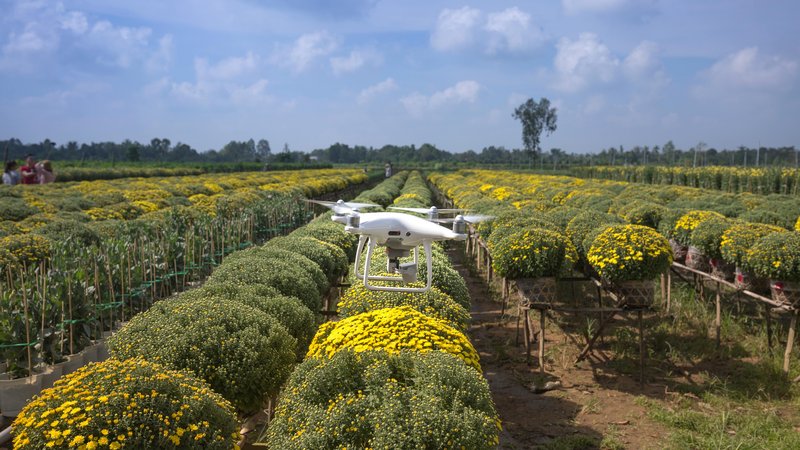
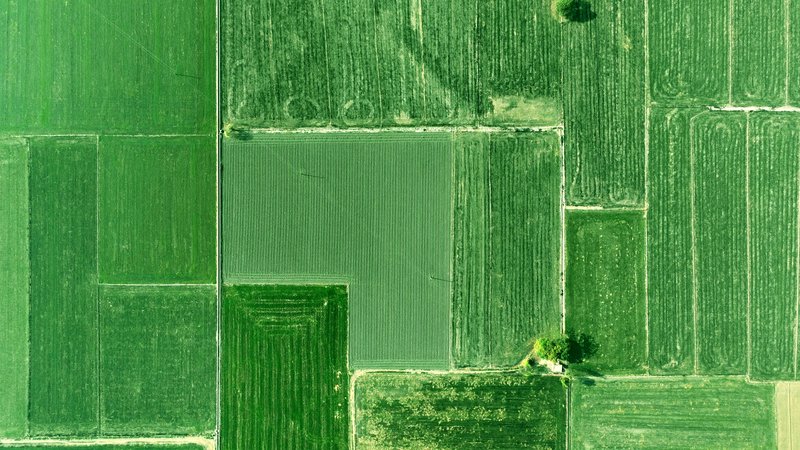
Agricultural drones equipped with multispectral cameras and AI image-processing software are now capable of surveying thousands of acres in a single flight. The data they generate feeds directly into crop management platforms, enabling same-day intervention decisions.
Autonomous ground robots are advancing in parallel. Weeding robots, seeding robots, and harvest-assist machines are moving from pilot programs into commercial deployment, particularly in labor-intensive specialty crop sectors.
Real-Time Data Monitoring and Predictive Analytics
Real-time soil moisture sensors, weather stations, and satellite imagery feeds are creating continuous data streams that AI models can analyze to generate actionable recommendations. This moves farming from reactive to genuinely predictive management.
Predictive analytics platforms can now forecast disease outbreaks, yield shortfalls, and irrigation needs days or weeks in advance. Early warning capabilities have been shown to reduce crop losses significantly in documented field deployments.
Livestock Monitoring and Automation Solutions
AI adoption in livestock management has accelerated sharply. Smart ear tags, computer vision barn monitoring systems, and automated feeding platforms now allow producers to track individual animal health, behavior, and productivity at scale.
Early detection of illness through AI-driven behavioral analysis has demonstrated clear economic value. Reducing mortality rates and veterinary intervention costs are among the most quantifiable ROI drivers in livestock AI applications.
Government Support and Subsidy Programs
Government programs in major agricultural economies are increasingly incorporating AI adoption incentives. Grants, tax credits, and subsidized loan programs specifically targeting precision agriculture and digital farm tools have expanded significantly in recent policy cycles.
Farmers who proactively engage with agricultural extension services and rural development agencies are best positioned to access these programs. Staying informed about program eligibility windows is critical, as funding cycles are often time-limited.
Blockchain Integration for Supply Chain Transparency
Blockchain technology is increasingly being paired with AI to create end-to-end supply chain transparency. From seed sourcing to retail shelf, every transaction and quality checkpoint can be recorded immutably, reducing fraud and improving food safety traceability.
For premium market producers — organic, fair-trade, and specialty crop growers — blockchain-backed provenance documentation is becoming a competitive differentiator. AI automates the data collection that makes blockchain records reliable and tamper-evident.
Regulatory Frameworks and Data Privacy Considerations
As farms generate and share increasingly sensitive operational data, regulatory scrutiny around data ownership, storage, and third-party access is intensifying. Data privacy has become one of the most contested issues in agricultural technology adoption.
Farmers are advised to carefully review data licensing terms before signing contracts with AI platform providers. Understanding who owns the data generated on your land — and how it can be used commercially — is a non-negotiable due diligence step.
Workforce Training and Skills Gap Requirements
The technical complexity of modern AI agriculture systems has created a significant skills gap across the farming workforce. Operating drone fleets, interpreting machine learning outputs, and managing integrated sensor networks requires training that traditional agricultural education has not historically provided.
Community colleges, agricultural universities, and online platforms are expanding digital agriculture curricula rapidly. Investing in workforce training is as important as investing in the technology itself for successful long-term AI adoption.
Return on Investment Across Farm Sizes and Crop Types
ROI from AI agriculture investments varies considerably depending on farm scale, crop type, and the specific tools deployed. High-value specialty crops like berries, vegetables, and tree fruits typically show the fastest payback periods due to the high per-acre revenue they generate.
Commodity grain operations tend to require larger acreage to achieve comparable ROI from precision AI tools. However, even modest per-acre efficiency gains across thousands of acres produce substantial aggregate economic value. For deeper insight, exploring AI in crop management is a practical next step.
Adoption Barriers in Emerging and Developing Markets
In emerging markets, AI agriculture adoption faces structural barriers that go beyond cost. Unreliable electricity supply, limited internet connectivity, and fragmented land ownership patterns all create friction that technology providers must design around to achieve meaningful penetration.
Mobile-first, low-bandwidth AI tools have shown the most promise in these environments. SMS-based advisory systems and offline-capable apps are bridging the connectivity gap in sub-Saharan Africa and parts of South and Southeast Asia.
Environmental Impact and Sustainability Metrics
One of the strongest arguments for AI agriculture adoption is its documented environmental benefit. Precision application of inputs reduces chemical runoff, lowers greenhouse gas emissions from over-fertilization, and decreases water consumption in irrigation-dependent regions.
These environmental gains are increasingly relevant as farms face regulatory pressure to demonstrate sustainability performance. AI-generated data trails also make it easier to verify and report environmental compliance metrics to certifying bodies and buyers.
IoT and Sensor Integration in Modern Farming
The Internet of Things (IoT) forms the physical data collection layer that makes agricultural AI possible. Soil sensors, weather stations, flow meters, and equipment telematics generate the raw data streams that AI models transform into actionable intelligence.
Sensor network density directly correlates with AI model accuracy. Farms that invest in comprehensive sensor infrastructure consistently extract more value from their AI platforms than those relying on sparse or intermittent data sources.
Climate Risk Mitigation Through AI-Driven Insights
Climate variability is one of the most powerful motivators driving AI adoption in agriculture. Unpredictable rainfall patterns, shifting frost dates, and increased extreme weather frequency are forcing farmers to adopt more sophisticated risk management tools. The connection between climate change and farming has never been more operationally urgent.
AI-driven climate risk models allow farms to scenario-plan across multiple weather outcomes, adjust planting schedules dynamically, and optimize crop variety selection for resilience rather than yield alone. In a world of increasing climate uncertainty, this predictive capability is fast becoming a competitive necessity rather than a luxury.
The trajectory of AI in agriculture is not a speculative forecast — it is an observable, measurable shift already embedded in the operational fabric of modern farming. The farms that build digital literacy, invest strategically in scalable tools, and engage with the evolving policy and regulatory landscape will be best positioned to capture the full value this transformation offers.