Are Milwaukee and Ryobi Made in the Same Factory?

Many tool buyers have asked whether are Milwaukee and Ryobi made in same factory, especially after learning that both brands fall under the same corporate umbrella. It is a fair question, and the short answer is no — they are not manufactured in the same facilities, even though they share a common parent company. Understanding why requires a closer look at how that parent company deliberately separates its brands at nearly every level of the production process.
Both Milwaukee and Ryobi are owned by Techtronic Industries, commonly known as TTI, a Hong Kong-based conglomerate that also owns other well-known tool and appliance brands. TTI’s brand strategy is built around keeping each label distinct in terms of engineering, pricing, and target audience. That separation is not just marketing — it is baked into how and where the products are physically built.
Understanding TTI’s Ownership Structure
TTI is the parent company of both Milwaukee Tool and Ryobi, but the relationship is more nuanced than simple co-ownership. Milwaukee is wholly owned by TTI, while Ryobi tools are produced under a licensing agreement with Ryobi Limited, a separate Japanese company.
This licensing arrangement is a critical distinction. Ryobi’s ownership structure means TTI manufactures and sells Ryobi-branded power tools, but Ryobi Limited retains control of the brand name and certain design standards. Milwaukee, by contrast, is a fully integrated TTI brand with no outside licensing constraints.
This structural difference directly influences how each brand is managed internally. Milwaukee operates with a higher degree of TTI’s direct engineering investment, while Ryobi follows guidelines shaped partly by an external licensor.
Manufacturing Locations and Global Operations
Milwaukee tools are primarily manufactured in facilities located in the United States, China, and other countries, depending on the product line. The brand has made notable investments in U.S.-based manufacturing, with plants in states like Mississippi and Tennessee.
Ryobi tools, on the other hand, are predominantly manufactured in China and other parts of Asia. Their factory locations are entirely separate from Milwaukee’s production sites, with no shared floor space or assembly lines between the two brands.
The geographic separation reinforces the product-tier gap between the two brands. Different factories, different workforces, and different quality benchmarks are used for each label, even under the same corporate ownership.
Brand Positioning and Market Segmentation
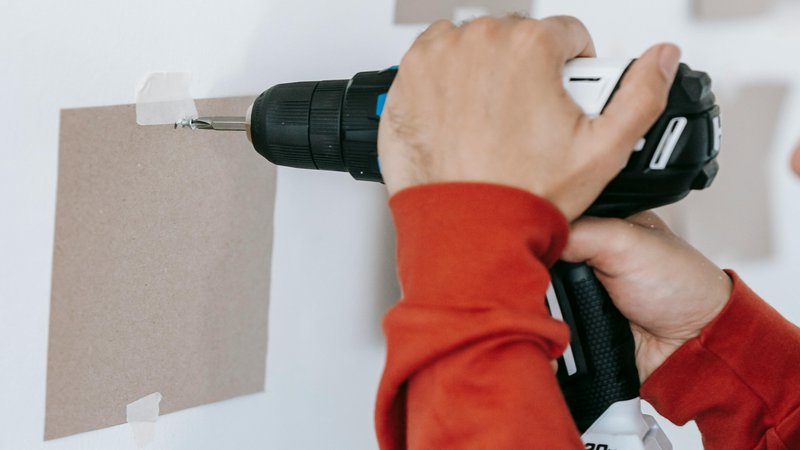
TTI intentionally positions Milwaukee and Ryobi at opposite ends of the power tool market. Milwaukee targets professional tradespeople and heavy-duty commercial users who prioritize performance and durability above all else.
Ryobi is aimed squarely at the DIY homeowner and casual user market. It offers a wide range of affordable, easy-to-use tools that prioritize accessibility over raw power or longevity under heavy professional use.
This deliberate segmentation protects both brands from cannibalizing each other’s sales. A professional contractor is unlikely to cross-shop a Ryobi drill with a Milwaukee drill because the intended use cases and performance expectations are fundamentally different.
Quality Control and Specification Standards
Milwaukee tools are held to significantly stricter internal specifications than Ryobi products. The engineering tolerances, materials used, and testing protocols differ substantially between the two brands.
Milwaukee tools undergo more rigorous durability testing designed to simulate the demands of professional job sites. This includes higher cycle counts, more extreme temperature testing, and stricter torque and vibration standards.
Ryobi’s quality control is calibrated for its target audience’s needs. For occasional home use, Ryobi’s standards are entirely adequate — but they are not designed to withstand the punishment of daily professional use over many years.
Battery Technology and Platform Differences
One of the clearest signs that Milwaukee and Ryobi are not made in the same factory is their completely incompatible battery systems. Milwaukee uses its M12 and M18 REDLITHIUM battery platforms, engineered in-house with proprietary cell chemistry and electronics.
Ryobi uses its own ONE+ battery platform, which is designed for broad compatibility across its large catalog of tools. While ONE+ is impressive for its price point, it does not share any components with Milwaukee’s battery systems.
If the two brands were built in the same factory using shared components, battery cross-compatibility would be a logical outcome. The complete incompatibility of their battery platforms is strong evidence of entirely separate development pipelines.
Price Differentiation Between Brands
The price gap between Milwaukee and Ryobi is substantial and intentional. A comparable Milwaukee drill will typically cost two to three times more than its Ryobi equivalent, reflecting differences in materials, engineering, and target market.
TTI uses this price separation as a key part of its multi-brand strategy. By keeping the brands at different price tiers, TTI captures a much wider share of the total power tool market than it could with a single brand.
For homeowners focused on budget-friendly gardening or outdoor projects — similar to how one might approach zero-waste gardening with affordable tools — Ryobi offers excellent value. Milwaukee is the choice when the work demands professional-grade reliability day after day.
Component Sourcing and Supply Chain Strategy
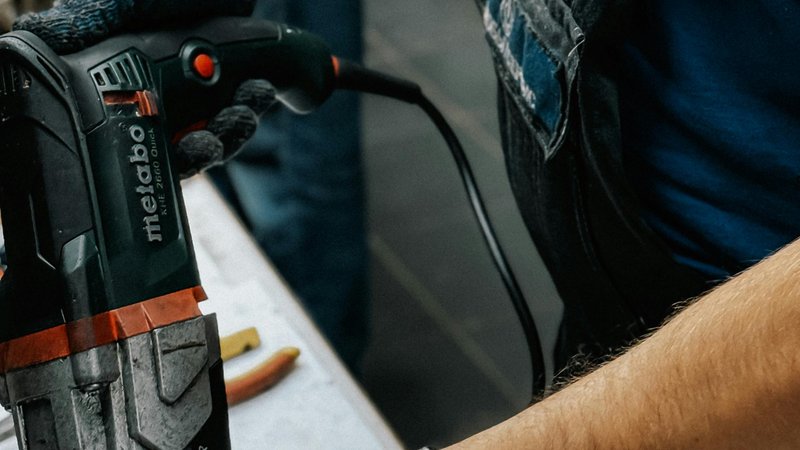
While both brands benefit from TTI’s large-scale purchasing power for raw materials, their component sourcing is largely separate. Each brand sources motors, housings, gears, and electronics according to its own specifications and budget targets.
Milwaukee sources higher-grade internal components to meet the demands of its professional user base. Ryobi uses components that are cost-optimized for its price-sensitive consumer market without sacrificing reliability for light-duty use.
Some base-level commodity parts — such as standard fasteners or generic plastics — may come from the same suppliers simply due to TTI’s corporate procurement scale. But the core performance components are sourced and specified independently for each brand.
Warranty and Customer Service Comparison
The warranty structures for Milwaukee and Ryobi differ in meaningful ways that reflect their different market positions. Milwaukee typically offers a five-year limited warranty on its tools, backed by a professional-grade service network.
Ryobi generally offers a three-year limited warranty for its tools, which is still competitive for the DIY market segment. Both brands honor their warranties through separate service channels, further confirming their operational independence. Understanding warranty differences matters — just as top brand warranty comparisons show, coverage terms often reflect the true quality tier of a product.
The separate service infrastructures mean that a Milwaukee repair center will not service Ryobi tools and vice versa. This operational separation extends all the way through the product lifecycle, from manufacturing to post-sale support.
Environmental and Sustainability Practices
TTI has made corporate-level commitments to sustainability that apply across all of its brands, including both Milwaukee and Ryobi. The company’s stated goal is to reduce energy consumption and minimize environmental impact by improving environmental management systems and using recycled materials whenever practical.
However, the way these sustainability goals are implemented can differ between brands. Milwaukee’s manufacturing investments in the U.S. involve different regulatory environments and energy standards compared to Ryobi’s Asian production facilities.
Both brands are moving toward more energy-efficient battery platforms as part of TTI’s broader push to reduce the environmental footprint of its product lines. The shared sustainability mission is one of the few areas where the two brands truly operate under the same guiding framework.
Performance and Reliability Across Product Categories
In head-to-head performance comparisons, Milwaukee tools consistently outperform Ryobi tools in demanding categories like heavy-duty drilling, impact driving, and reciprocating saw work. This is not accidental — it is the result of deliberate engineering investment.
Ryobi performs admirably within its intended use case. For light-to-medium tasks around the home, garden, or small workshop, Ryobi tools deliver reliable results at a price point that makes them accessible to a much broader audience.
The performance gap between the two brands is itself proof that they are not built in the same factory to the same standards. Shared manufacturing would inevitably produce similar performance outcomes — and it simply does not.
The bottom line is clear: TTI’s ownership of both brands is a corporate financial reality, not a manufacturing one. The two brands serve different customers, are built in different places, and are engineered to different standards. Knowing this helps buyers make smarter purchasing decisions based on their actual needs rather than assumptions about shared origins.