AI in Agriculture: Benefits, Risks & Future


The rise of AI in agriculture is reshaping how the world grows, manages, and distributes food. From autonomous machinery to predictive analytics, artificial intelligence is giving farmers tools that were unimaginable just a decade ago—tools that address real-world pressures like labor shortages, climate volatility, and rising input costs.
Yet this transformation is not without complexity. As these technologies scale across farms of every size, questions around cost, regulation, data ownership, and ethical deployment are becoming just as important as the innovations themselves. Understanding both sides of this shift is essential for any farmer, investor, or policymaker navigating the future of food production.
Understanding AI in Modern Farming
Modern agricultural AI encompasses a wide range of technologies—machine learning, computer vision, sensor networks, and robotics—all working together to optimize farm operations. These systems collect and interpret vast amounts of data to support smarter, faster decisions.
The shift is not just technological but structural. AI is changing who makes decisions on the farm and how quickly those decisions can be acted upon. Farmers are increasingly becoming data managers as much as land stewards.
Core Benefits of Agricultural AI Systems
AI-driven systems deliver measurable gains across nearly every aspect of farm management. They reduce waste, improve timing, and surface insights that human observation alone would miss.
The compounding effect of these benefits—better yields, lower input costs, and reduced environmental impact—makes a compelling case for adoption at scale. Agricultural intelligence is increasingly viewed as a foundational layer of the modern food system.
Precision Crop Monitoring and Disease Detection
AI-powered imaging tools can scan entire fields in hours, identifying early signs of disease, pest pressure, or nutrient deficiency with remarkable accuracy. This allows farmers to intervene before problems spread and cause significant yield loss.
Computer vision models trained on millions of plant images can now detect conditions that even experienced agronomists might miss at early stages. Early detection can reduce crop losses by targeting interventions precisely rather than applying blanket treatments.
Optimizing Yields Through Data-Driven Insights
Predictive models analyze historical weather patterns, soil composition, and real-time satellite data to recommend optimal planting windows, fertilizer rates, and harvest timing. These recommendations are tailored to specific field zones rather than entire farms.
The result is a shift from reactive to proactive farm management. Farmers who embrace peer-reviewed research on AI-driven yield optimization are consistently outperforming those relying solely on traditional methods.
Automation Solutions for Labor Challenges
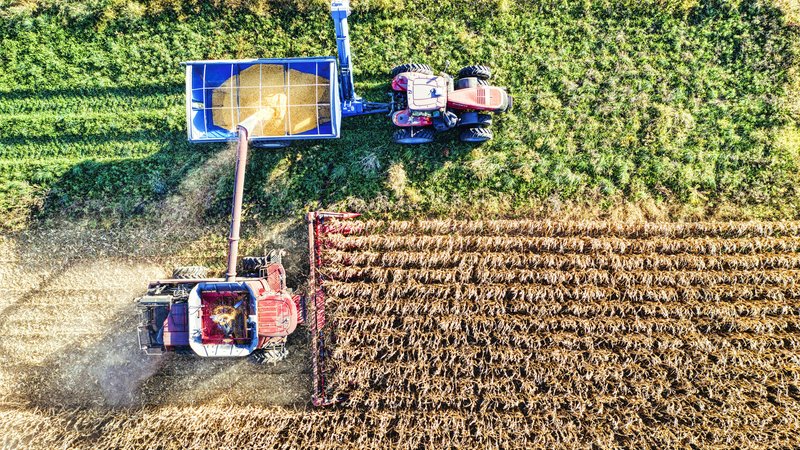
Labor shortages remain one of the most persistent challenges in agriculture, particularly during planting and harvest seasons. Autonomous machinery is increasingly stepping in to fill these gaps reliably and at scale.
Robotic harvesters, automated planters, and AI-guided sprayers are now deployed on farms across multiple continents. For a deeper look at how aerial automation fits into this picture, drone farm management offers a compelling entry point.
Intelligent Irrigation and Resource Management
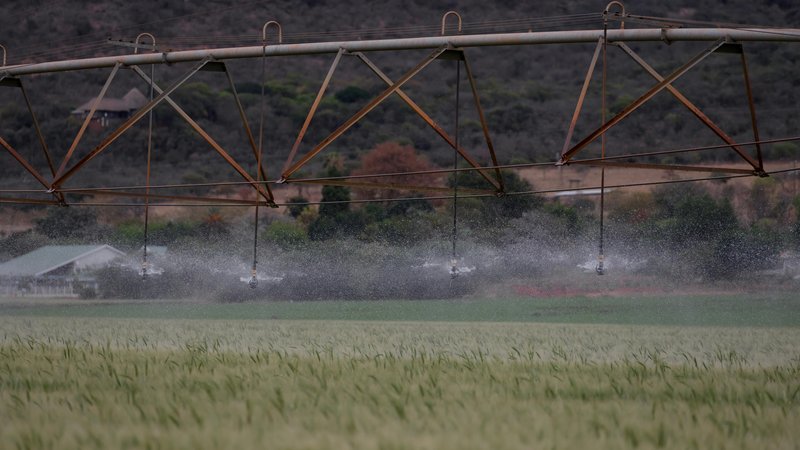
AI-powered irrigation systems use soil moisture sensors, evapotranspiration models, and weather forecasts to deliver water precisely when and where crops need it. This eliminates the guesswork that leads to both overwatering and drought stress.
Smart irrigation has demonstrated the ability to cut water usage significantly while maintaining or improving crop quality. In water-scarce regions, this capability is not just an efficiency gain—it is a survival tool.
Livestock Health and Monitoring Applications
Wearable sensors and computer vision systems now monitor livestock for signs of illness, stress, or reproductive activity around the clock. Alerts are sent to farmers before conditions deteriorate, enabling faster and less costly interventions.
AI models can analyze movement patterns, feeding behavior, and biometric data to predict health events days in advance. This level of continuous monitoring was previously impossible without significantly larger labor forces.
Supply Chain Transparency and Traceability
Consumers and regulators are demanding greater visibility into where food comes from and how it was produced. AI-powered traceability platforms are making it possible to track products from farm to shelf with unprecedented granularity.
Emerging traceability solutions are addressing this need directly. Companies like Caddy and iFoodDS are emerging as food and agriculture-specific platforms built to handle the complexity of modern supply chains at scale.
Regulatory Frameworks and Compliance Standards
As AI-driven machinery becomes standard on farms, governments worldwide are working to establish safety and accountability standards. The pace of regulation is struggling to keep up with the pace of innovation.
Regulators are prioritizing safety standards to address new risks posed by AI-driven machinery, including autonomous tractors and robotic systems. Farmers adopting these technologies must stay current with evolving compliance requirements to avoid operational and legal exposure.
Implementation Costs Across Farm Scales
The cost of AI adoption varies enormously depending on farm size, existing infrastructure, and the specific technologies being deployed. Large commercial operations often have the capital and scale to justify significant upfront investment.
Smaller farms face a steeper challenge, though subscription-based and pay-per-use models are lowering the barrier to entry. The emergence of modular, affordable AI tools is gradually democratizing access beyond large agribusiness.
Adoption Barriers and Technical Challenges
Connectivity remains a significant obstacle in rural areas where reliable internet access is limited or nonexistent. Many AI platforms depend on continuous data transmission that simply is not available in remote farming regions.
Hardware durability, software complexity, and the steep learning curve of new platforms also slow adoption. Farmers who have managed land for generations are often skeptical of systems they cannot fully understand or control.
Data Privacy and Security in Agricultural Systems
AI platforms collect enormous volumes of sensitive farm data—soil profiles, yield histories, financial performance, and operational patterns. This data has significant commercial value, raising legitimate concerns about who owns it and how it is used.
Farmers should carefully review data licensing agreements before deploying any AI platform on their operations. Weak data governance frameworks can expose growers to exploitation by technology providers or competitors.
Integration with Traditional Farming Practices
The most effective AI deployments do not replace traditional knowledge—they amplify it. Experienced farmers bring contextual understanding that no algorithm can fully replicate, particularly in managing microclimates or unusual soil conditions.
Blending generational expertise with data-driven tools tends to produce better outcomes than either approach in isolation. This is especially relevant for operations exploring sustainable agriculture practices alongside modern technology.
AI for Soil Health and Carbon Sequestration
AI models are now being used to assess soil health at a granular level, identifying carbon content, microbial activity, and compaction issues across field zones. This data supports regenerative practices that improve long-term productivity.
Carbon sequestration programs increasingly rely on AI-verified soil data to validate credits and ensure measurement accuracy. This creates a direct financial incentive for farmers to invest in soil monitoring technology.
Ethical Considerations in Automated Harvesting
The displacement of agricultural workers by robotic harvesting systems raises serious ethical questions about rural employment and community sustainability. These concerns are particularly acute in developing economies where farm labor supports large populations.
Technology developers and policymakers have a shared responsibility to address these impacts proactively. Automation without a parallel investment in workforce transition programs risks deepening rural inequality.
Risk Management and AI-Powered Crop Insurance
AI is transforming crop insurance by enabling more accurate risk assessment and faster claims processing. Satellite imagery and machine learning models can assess crop damage within hours of a weather event rather than weeks.
Parametric insurance products, triggered automatically by verifiable AI-monitored conditions, are reducing the friction and disputes that have historically plagued agricultural insurance markets. This is making coverage more accessible and trustworthy for smallholder farmers.
Skills Development and Farmer Training Requirements
Deploying AI tools effectively requires a new set of skills that many farmers have not had the opportunity to develop. Digital literacy, data interpretation, and basic platform management are now becoming essential competencies.
Agricultural extension services, universities, and technology companies are all investing in training programs to bridge this gap. The long-term success of AI adoption in farming depends as much on education as it does on the technology itself.
Platform Interoperability and System Integration
Many farms use multiple AI tools simultaneously—one for irrigation, another for crop monitoring, another for equipment management—and these systems often do not communicate with each other. This fragmentation limits the value of the data being collected.
Open data standards and API-driven architectures are gradually improving interoperability, but the industry has not yet converged on universal protocols. Farmers should prioritize platforms that support open data exchange when evaluating new technology investments.
Regional Variations in AI Agriculture Adoption
Adoption rates vary dramatically by region, shaped by infrastructure quality, government support, farm size distribution, and cultural attitudes toward technology. North America, Europe, and parts of East Asia are leading in deployment, while sub-Saharan Africa and South Asia face greater structural barriers.
Even within high-adoption regions, significant gaps exist between large commercial operations and smaller family farms. Closing these gaps requires targeted policy interventions and locally adapted technology solutions rather than one-size-fits-all approaches.
The Evolving Landscape of Smart Farming
The trajectory of AI in agriculture points toward increasingly integrated, autonomous, and intelligent farm systems. As models improve and hardware costs decline, the technologies that seem advanced today will become baseline expectations within a generation.
What remains constant is the fundamental goal: producing enough nutritious food for a growing global population while protecting the natural systems that make agriculture possible. AI is a powerful instrument in service of that goal, but it is not a substitute for sound land stewardship, equitable policy, and the deep knowledge that experienced farmers carry. Those who approach these tools with both curiosity and critical judgment will be best positioned to benefit from everything smart farming has to offer.