
How to Farm Hillsides: Methods & Techniques


Hillside farming is one of agriculture’s oldest and most resilient practices, used by civilizations across Asia, South America, and Europe long before modern techniques existed. Sloped land that looks challenging at first glance can actually offer a surprising range of natural advantages—from improved drainage and extended frost-free seasons to better sun exposure and natural irrigation potential. Understanding how to work with the land rather than against it is the foundation of everything that follows.
This guide walks through the core methods, strategies, and practical decisions involved in farming on sloped terrain. Whether you are managing a small homestead plot or a larger hillside operation, the principles covered here apply across climates, crop types, and farm sizes. Getting the fundamentals right early saves enormous time, money, and topsoil in the long run.
Understanding Hillside Farming Fundamentals
Sloped land behaves differently from flat ground in almost every measurable way—water moves faster, soil shifts more easily, and microclimates vary dramatically within short distances. Before any planting or infrastructure work begins, a thorough site assessment is essential.
Measure your slope gradient carefully. Gradients under 15% are generally manageable with standard equipment, while steeper slopes demand specialized approaches like terracing or contour planting.
Identify your slope’s orientation early. Southwest-facing slopes receive significantly more solar warmth from spring through fall, which can extend your growing season in meaningful ways.
Study how water flows across your land during and after rainfall. Understanding natural drainage patterns before you build anything prevents costly erosion damage and waterlogging problems later.
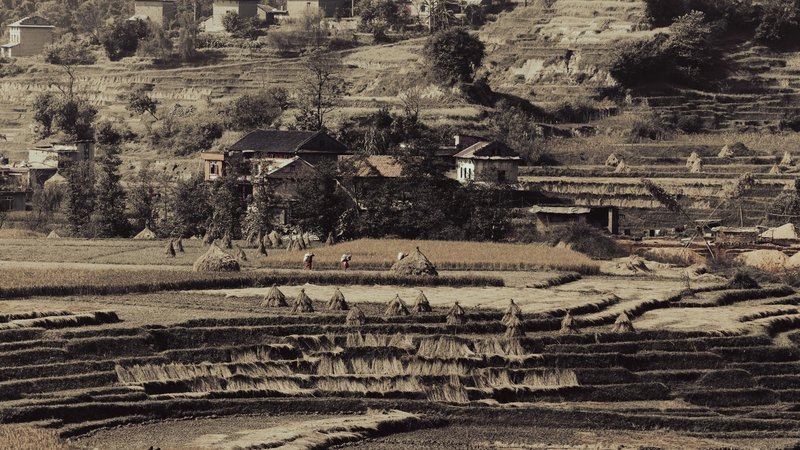
Terracing and Land Management Strategies
Terracing is the most time-tested method for converting steep slopes into productive farmland. By cutting level platforms into the hillside, farmers create stable planting surfaces that dramatically slow water runoff and reduce soil loss.
There are several terrace styles to consider, including bench terraces, ridge terraces, and broad-based terraces. Your choice depends on slope steepness, soil type, available labor, and the crops you intend to grow.
Contour farming—plowing and planting along lines of equal elevation rather than up and down the slope—is a simpler alternative to full terracing. It slows runoff effectively and works well on moderate slopes where full terracing is not yet practical.
Retaining walls built from stone, timber, or compacted earth anchor terrace edges and prevent collapse. Regular inspection and maintenance of these walls after heavy rain events is critical to long-term stability.
Soil Erosion Prevention and Topsoil Rehabilitation
Topsoil loss is the single greatest threat to hillside farm productivity. Once the thin fertile layer washes away, rebuilding it takes years of consistent effort and investment.
Cover crops planted between main crop cycles bind the soil surface with root networks and protect it from raindrop impact. Leguminous cover crops like clover and vetch also fix nitrogen, feeding the next planting season naturally.
Soil landscape rehabilitation research highlights the importance of restoring biological activity as a first step before addressing physical erosion barriers. Healthy soil biology holds structure far better than compacted, biologically depleted ground.
Mulching exposed soil between rows is another highly effective and low-cost erosion control method. A thick mulch layer of 3 to 4 inches can reduce surface runoff velocity by more than half on moderate slopes.
Water Management and Irrigation on Slopes
One of the genuine advantages of hillside farming is the ability to use gravity as a free irrigation resource. Water collected at higher elevations can be channeled downslope to fields below without any pumping energy cost.
As High Mowing Seeds notes, gravity-fed irrigation is a practical advantage that flat-land farmers simply do not have access to. This can translate into meaningful savings on energy and infrastructure over a farming lifetime.
Swales—shallow ditches dug along contour lines—capture runoff and allow it to slowly percolate into the soil rather than rushing downhill. They are inexpensive to construct and dramatically improve moisture retention across a slope.
Drip irrigation systems are especially well-suited to hillside conditions because they deliver water directly to root zones with minimal runoff waste. Drip systems on slopes consistently outperform overhead sprinklers in water use efficiency.
Nutrient Management and Soil Building
Nutrients on hillsides tend to migrate downslope over time, creating fertility gradients where lower sections of a field are richer than upper ones. Recognizing and managing this pattern is key to even, productive yields.
Composting is one of the most effective tools for rebuilding hillside soil fertility. Applying finished compost regularly returns organic matter and microbial life to soils that erosion and leaching have depleted. If you are building a composting system at home, a good compost bin makes the process significantly easier.
Rotational planting of nitrogen-fixing crops helps redistribute fertility more evenly across a slope over multiple seasons. This reduces dependence on purchased inputs while improving long-term soil health.
Agronomic journal research supports the use of integrated nutrient management strategies that combine organic amendments with targeted mineral inputs for sustained productivity on challenging terrain.
Crop Selection for Hillside Cultivation
Not every crop thrives on sloped terrain, and matching plants to your specific conditions is one of the most impactful decisions a hillside farmer makes. Soil type, drainage, sun exposure, and slope angle all influence what will grow well.
Mountain soils are particularly well-suited to tea, coffee, spices, and fruit crops, which naturally thrive in the well-drained, slightly acidic conditions common on hillsides. These crops have been cultivated on slopes for centuries across tropical and subtropical regions.
Perennial fruit trees and berry bushes are excellent hillside choices because their deep root systems stabilize soil while producing yields year after year. Once established, they require far less annual labor than row crops. For ideas on fruit-bearing plants suited to sloped or unconventional spaces, exploring climbing fruit plants can open up creative vertical growing options.
Shallow-rooted annual vegetables can also succeed on hillsides when planted on terraces or in well-prepared contour beds. Choosing varieties with compact root systems reduces competition for limited topsoil depth on steeper gradients.
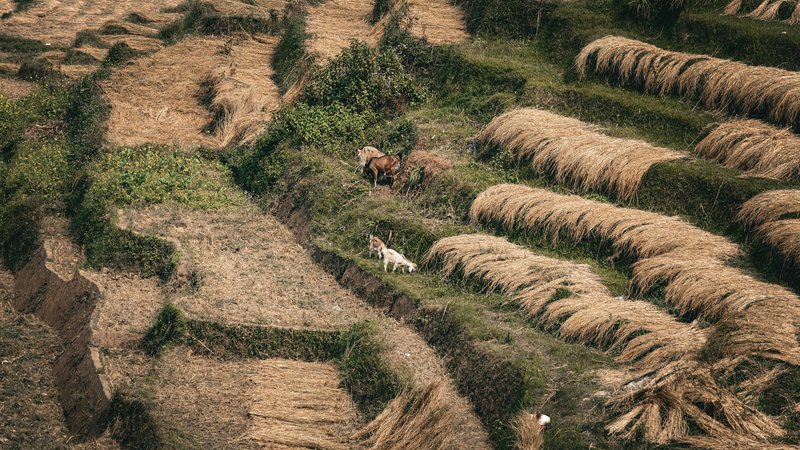
Livestock Grazing on Sloped Terrain
Livestock can be a valuable part of a hillside farming system, but poorly managed grazing accelerates erosion faster than almost any other activity. Rotational grazing is essential to prevent overuse of any single area.
Goats and sheep are naturally adapted to navigating steep terrain and can graze areas that cattle find difficult. They are often used to clear brush and weeds on slopes before crop establishment.
Limiting herd density and moving animals frequently prevents soil compaction and bare patches that become erosion hotspots. Fencing systems that guide grazing patterns are a worthwhile investment on any sloped livestock operation.
Solar Gain and Slope Orientation Advantages
Slope orientation is a natural asset that flat-land farmers cannot replicate. South and southwest-facing slopes in the Northern Hemisphere receive more direct sunlight across the growing season, warming soil earlier in spring and retaining heat later into fall.
This solar advantage translates directly into a longer effective growing season. Hillside growers can often gain an extra week or more of frost-free conditions compared to valley-floor neighbors, simply because cold air drains downhill and settles in low-lying areas.
Strategically placing heat-loving crops like tomatoes, peppers, and melons on the warmest-facing slopes maximizes the thermal benefit of your terrain. This requires no additional infrastructure—just thoughtful planning at planting time.
Labor and Mechanization Considerations
Hillside farming is inherently more labor-intensive than flat-land agriculture, particularly when it comes to soil preparation, planting, and harvest. Recognizing this reality upfront allows for realistic planning and appropriate resource allocation.
Compact tractors and walk-behind two-wheel tractors are far more practical on slopes than full-size equipment. Many American-made compact tractor models are specifically designed for uneven terrain—a useful reference point when evaluating equipment options for American-made tractors.
On very steep slopes, hand tools and animal-powered cultivation remain the most practical and safest approaches. Never operate wheeled machinery on slopes exceeding the manufacturer’s rated safe angle—rollover accidents on hillsides are a leading cause of farm fatalities.
Cost-Benefit Analysis: Hillside vs. Flat Land Farming
Hillside land typically costs significantly less to purchase than comparable flat agricultural ground, which lowers the barrier to entry for new farmers. This initial cost advantage can offset the higher labor and infrastructure investment required over time.
Terrace construction and erosion control infrastructure represent real upfront costs that flat-land farmers do not face. However, these investments are largely one-time expenses that pay dividends across decades of productive farming.
The long-term productivity of well-managed hillside land can match or exceed flat land when soil health is maintained and water is managed effectively. The key variable is management quality, not terrain alone.
Climate Adaptation and Extreme Weather Resilience
Hillside farms are naturally buffered against certain types of extreme weather that devastate low-lying agricultural land. Elevated positions drain excess water quickly during heavy rain events, reducing flood damage risk significantly.
As slope farming research confirms, hillside growers are protected from flooding during heavy rains while valley farmers face inundation. This resilience advantage becomes increasingly valuable as weather patterns grow more unpredictable.
The microclimate diversity of a single hillside also provides natural insurance. If a late frost damages crops in the lower sections, upper-slope plantings often survive, preserving at least part of the season’s yield.
Pest and Disease Management Strategies
Good air circulation on slopes naturally reduces the humidity that favors fungal diseases and certain pest populations. This is a passive benefit that requires no active management but should factor into crop placement decisions.
Diverse plantings across a hillside create habitat for beneficial insects that prey on pest species. Monoculture on slopes is particularly risky because pest populations can move rapidly across exposed, uniform plantings.
Integrated pest management approaches that combine biological controls, physical barriers, and targeted interventions are especially effective on hillside farms where chemical runoff risks are higher than on flat land.
Biodiversity and Ecosystem Services
Hillside farms that incorporate diverse plantings, hedgerows, and native vegetation strips support significantly higher levels of biodiversity than monoculture operations on any terrain type. This biodiversity delivers real, measurable agricultural benefits.
Pollinators, predatory insects, birds, and soil organisms all contribute to farm productivity in ways that are difficult to fully quantify but easy to observe in healthy, diverse hillside systems. Protecting and expanding these populations should be an explicit farm management goal.
Agricultural research consistently demonstrates that farms with higher plant and habitat diversity show greater resilience to both pest pressure and climate variability over time.
Technology Solutions for Slope Agriculture
Precision agriculture tools originally developed for flat-land operations are increasingly being adapted for sloped terrain. Drone-based mapping, for example, can produce detailed elevation and drainage models of a hillside in a fraction of the time manual surveys require.
Soil moisture sensors placed at multiple elevations on a slope allow farmers to track how water moves through the landscape in real time. This data enables much more precise irrigation scheduling and early identification of erosion-prone zones.
GPS-guided equipment that accounts for slope angle is now available for compact tractor platforms, improving both safety and field operation accuracy on uneven terrain. The cost of these systems continues to fall as adoption increases.
Economic Subsidies and Government Support Programs
Many national and regional agricultural agencies offer specific support programs for farmers working on marginal or sloped land. These programs often cover a portion of terracing costs, erosion control infrastructure, and cover crop seed expenses.
The USDA Agricultural Research Service conducts ongoing work on soil and land management practices relevant to challenging terrain, and their published resources are freely accessible to farmers seeking evidence-based guidance.
Researching local conservation district programs before beginning major hillside infrastructure work can significantly reduce out-of-pocket costs through cost-share agreements and technical assistance.
Carbon Sequestration and Climate Mitigation Benefits
Well-managed hillside farms with diverse vegetation, cover crops, and healthy soil biology are effective carbon sinks. Building organic matter in hillside soils sequesters atmospheric carbon while simultaneously improving fertility and water retention.
Agroforestry systems—integrating trees with crops or pasture on slopes—are among the most carbon-efficient land use approaches available to farmers today. Trees on hillsides also provide windbreaks, shade, and additional income streams from fruit or timber.
Farmers who document and verify carbon sequestration on their land may qualify for carbon credit markets, creating an additional revenue stream from sound land management practices.
Drought Resilience and Water Retention Techniques
Hillside farms can be surprisingly drought-resilient when water management infrastructure is properly designed. Swales, ponds, and check dams slow water movement and give it time to infiltrate the soil rather than running off the slope surface.
Deep-rooted perennial plants and trees access subsoil moisture that annual crops cannot reach, making them critical components of a drought-resilient hillside system. Strategically placed perennials also protect annual crop areas from drying winds.
Increasing soil organic matter by just 1% can roughly double the water-holding capacity of a given soil volume—a fact that makes consistent composting and cover cropping among the highest-return drought-resilience investments available to hillside farmers.
Market Opportunities for Hillside-Grown Products
Hillside-grown products often command premium prices in specialty and direct markets. Consumers and buyers increasingly recognize that terrain-specific growing conditions produce distinctive flavor profiles and quality characteristics in crops like coffee, tea, wine grapes, and specialty fruits.
The “mountain-grown” or “terroir” narrative is a genuine marketing asset that hillside farmers can leverage in direct-to-consumer channels, farmers markets, and specialty retail relationships. Authenticity and story are increasingly valued by buyers willing to pay above commodity prices.
Value-added products—jams, dried fruits, teas, and artisan preserves—from hillside-grown ingredients can significantly increase revenue per acre compared to selling raw commodities. Processing and packaging infrastructure is a logical next investment once production is stable.
Regional Case Studies and Geographic Applications
The rice terraces of Southeast Asia, the vineyard slopes of Europe, and the Andean potato fields of South America all demonstrate that hillside farming has produced reliable food supplies across vastly different climates and cultures for centuries. These systems were not accidents—they were the result of generations of careful observation and adaptation.
In temperate North America, hillside orchards and vineyards have long been recognized for producing fruit with superior flavor complexity compared to valley-floor equivalents. Cold air drainage reduces frost risk while slope-enhanced drainage prevents root diseases common in wet soils.
The most successful regional hillside farming systems share one common trait: they work with the natural behavior of their landscape rather than trying to force flat-land methods onto sloped terrain.
Soil Microbiome Differences on Slopes
Slope position has a measurable effect on soil microbial communities. Upper slopes tend to have drier, more aerobic conditions that favor certain fungal networks, while lower slopes support more diverse bacterial populations in their moister, richer soils.
Soil microbiome rehabilitation work by researchers like Dr. Sharon Schneider highlights how restoring microbial diversity is foundational to rebuilding productivity on degraded sloped land. Biology leads, and physical structure follows.
Avoiding soil disturbance, maintaining surface cover, and introducing diverse plant root systems are the most effective ways to support a healthy and diverse soil microbiome across all positions on a slope. Healthy soil biology is the invisible infrastructure that every other hillside farming strategy ultimately depends on.
Farming on hillsides demands more careful planning than working flat land, but the rewards—lower land costs, natural drainage, extended growing seasons, and premium market positioning—make it a genuinely viable and often highly productive choice. The farmers who thrive on slopes are those who invest time in understanding their specific terrain before reaching for tools or seeds.
Every slope is different, and the best hillside farming system is one built from close observation of how your particular land holds water, builds soil, and responds to the seasons. Start with the fundamentals, build your infrastructure gradually, and let the land’s natural advantages do as much of the work as possible.