Right to Repair Impact on Tractor Resale Value (2026 Update)


The debate over right to repair tractors resale value has moved from courtrooms and state legislatures directly onto the balance sheets of working farms. Farmers who once absorbed repair restrictions as a minor inconvenience are now watching those restrictions translate into measurable losses when it comes time to sell or trade their equipment. The connection between who controls a machine’s software and what that machine is worth on the open market is no longer theoretical—it is a daily financial reality for producers across the country.
Understanding this relationship requires looking at both the legal landscape and the economics of used equipment markets. Recent reporting confirms that the right-to-repair movement is a response to sophisticated market structures that limit consumer agency and leave individuals without competitive alternatives. For tractor owners, that lack of alternatives compounds every year a machine sits in a restricted ecosystem, quietly eroding the resale premium it might otherwise command.
Understanding the Right to Repair Movement in Agriculture
The agricultural right to repair movement centers on a farmer’s ability to diagnose, fix, and modify their own equipment without manufacturer intervention. Modern tractors are embedded with proprietary software that can lock out independent technicians and even the owners themselves.
R2R Solutions has been a leading voice in pushing for open diagnostic access across the farm equipment sector. Their work highlights how software lockouts create a two-tier ownership system where some farmers have full control and others do not.
The core repair principles behind the movement are straightforward: owners should have access to the same tools, documentation, and parts that authorized dealers use. Without that parity, the concept of ownership becomes hollow.
How Repair Restrictions Affect Tractor Market Dynamics
When a tractor can only be serviced through an authorized dealer network, the pool of potential buyers shrinks dramatically. Buyers who lack easy access to a dealership—or who simply want the freedom to self-repair—will discount their offers accordingly.
This dynamic is especially pronounced in rural areas where the nearest dealer may be hours away. A restricted machine in a remote county can lose a meaningful resale premium simply because the next owner cannot guarantee timely service.
The Forest River Farms lawsuit against Deere illustrates how these restrictions have been framed as anticompetitive. The case argues that locking diagnostic tools behind dealer walls artificially inflates service costs and suppresses the secondary market.

Resale Value Trends in the Post-Settlement Era
Following high-profile settlements and legislative pressure, some manufacturers have begun releasing diagnostic software to independent shops. Early market data suggests that tractors sold in states with stronger repair access laws are holding value more consistently than those in less regulated markets.
The logic mirrors what housing economists have long understood about resale-restricted assets. Resale formula research shows that when ownership restrictions are clearly defined and proportional, asset values can still appreciate in line with broader economic indices. The same principle applies to equipment: transparent, limited restrictions preserve more value than opaque, unlimited ones.
Tractors sold with documented repair histories from independent shops are increasingly commanding premiums over dealer-only-serviced units. Buyers interpret independent serviceability as a signal of lower future ownership costs.
Regional Variations in Used Tractor Pricing and Repair Accessibility
States that have passed or advanced right to repair legislation are becoming distinct sub-markets for used farm equipment. Colorado’s legislative efforts, tracked through state bill records, represent an early example of how local law can reshape local equipment pricing.
Michigan has followed a similar path, with proposed legislation aimed at guaranteeing farmers access to diagnostic tools and repair manuals. In markets where such bills pass, independent repair shops multiply, dealer monopolies weaken, and used equipment prices stabilize.
Conversely, in states with no repair access protections, the resale market for newer, software-heavy tractors remains volatile. Uncertainty about future serviceability creates a discount that sellers cannot easily overcome.
Manufacturer Approaches: John Deere, AGCO, CNH, and Kubota Compared
John Deere’s memorandum of understanding with the American Farm Bureau was widely covered but remains a voluntary agreement with limited enforcement mechanisms. The Farm Bureau’s position continues to push for binding legislative solutions rather than relying on manufacturer goodwill.
AGCO and CNH have taken somewhat more open stances on diagnostic access, which has translated into modest resale advantages for their equipment in competitive used markets. Buyers actively compare serviceability when evaluating machines of similar age and hours.
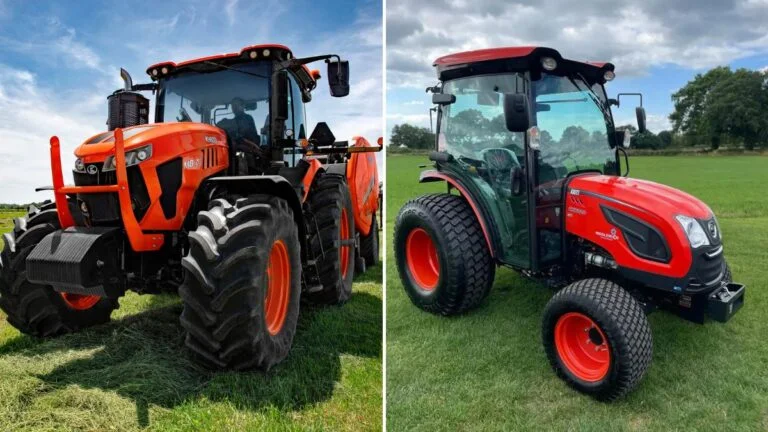
Kubota has positioned itself as a more independent-repair-friendly brand, a reputation that resonates particularly with smaller operations. If you’re weighing brands, a detailed Kubota vs Yanmar comparison can help clarify which manufacturer’s ecosystem better fits your long-term ownership goals.
The Economics of Equipment Ownership Versus Leasing
Repair restrictions have quietly shifted the calculus between owning and leasing farm equipment. When ownership no longer guarantees full control, leasing becomes comparatively more attractive because the serviceability burden stays with the lessor.
However, leasing eliminates the possibility of capturing resale value entirely. Farmers who lease through manufacturer programs surrender any equity upside that repair-friendly policy changes might otherwise unlock.
The antitrust framework governing these arrangements is rooted in federal competition law, which prohibits agreements that unreasonably restrain trade. Lease structures that effectively force dealer-only service relationships are increasingly scrutinized under this standard.
Financing and Insurance Implications for Restricted Equipment
Lenders and insurers are beginning to factor repair accessibility into their risk models. A tractor that can only be serviced by one dealer network carries a higher downtime risk, which translates into higher insurance premiums and more conservative loan-to-value ratios.
Some agricultural lenders have started requesting documentation of repair access rights before approving financing on newer, software-intensive machines. This is a quiet but meaningful shift in how the financial sector values equipment autonomy.
Farmers financing equipment purchases should ask explicitly whether the machine’s software license permits independent repair, and get that answer in writing before closing any deal.
Long-Term Depreciation Strategies for Farmers
Managing depreciation on software-locked equipment requires a different strategy than managing it on older mechanical machines. The depreciation curve tends to be steeper in the early years, as the market prices in the uncertainty of future repair access.
Farmers can partially offset this by maintaining meticulous service records and purchasing extended warranties that include software update provisions. Documented service history from authorized and independent shops combined can actually strengthen a resale listing.
Understanding the differences between tractor classes also matters for depreciation planning. Larger utility tractors tend to depreciate differently than smaller machines—a topic worth exploring in detail through a utility vs subcompact breakdown before making a purchase.
Generational Shifts in Equipment Purchasing Decisions
Younger farmers entering the industry have grown up with technology and are acutely aware of software licensing issues. They are more likely to research repair rights before purchasing and more likely to factor those rights into their price offers on used equipment.
This generational shift is gradually repricing the used tractor market. Machines with open repair ecosystems are attracting younger buyers who plan to hold equipment long-term, while restricted machines are increasingly left to buyers who prioritize low upfront cost over long-term flexibility.
The legal record in ongoing repair-rights litigation reflects this generational pressure, with plaintiffs increasingly articulating harm in terms of long-term ownership costs rather than just immediate repair bills.
Global Market Perspectives on Repair Rights and Resale Values
International used equipment markets add another layer of complexity. Tractors exported to markets with stronger repair traditions—particularly in parts of Europe and South America—can command premiums precisely because buyers in those markets expect to service their own machines.
Conversely, machines sold domestically under restrictive software agreements may face export complications if the license terms do not transfer cleanly across borders. Farmers considering international resale should verify software license portability before purchasing any restricted machine.
The global picture reinforces what domestic advocates have argued for years. Market analysts note that repair restrictions ultimately function as a tax on ownership—one that compounds over time and across borders, quietly eroding the value of assets that farmers depend on to sustain their livelihoods.