Autonomous Tractor Market Share & Leaders 2026

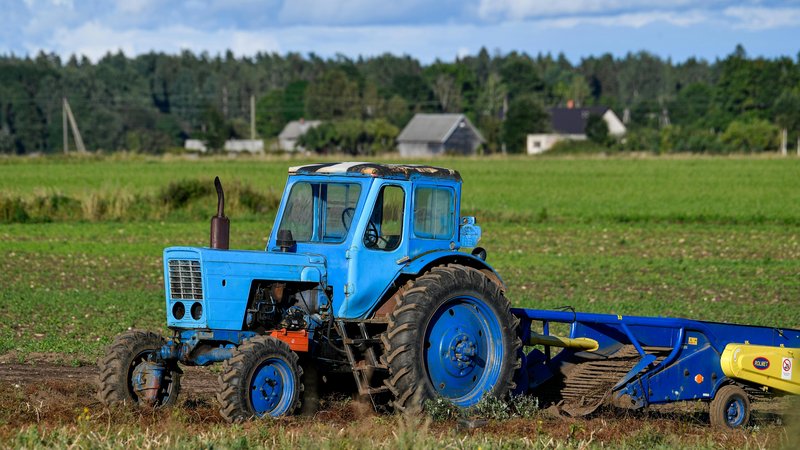
The race to dominate autonomous tractor market share has intensified as precision agriculture moves from concept to commercial reality. Major equipment manufacturers, technology startups, and established farm machinery brands are all competing aggressively for a slice of a market that analysts widely regard as one of the most transformative sectors in modern agriculture. Farmers across every major crop-producing region are evaluating autonomous solutions not as a distant luxury, but as a near-term operational necessity.
Understanding who leads this space—and why—requires looking at technology maturity, regional adoption rates, labor economics, and the evolving regulatory environment. AI in agriculture is no longer a fringe conversation; it sits at the center of every major equipment manufacturer’s product roadmap. This guide breaks down the landscape clearly so farmers, investors, and agri-tech professionals can make informed decisions.
Current Market Landscape and Key Players
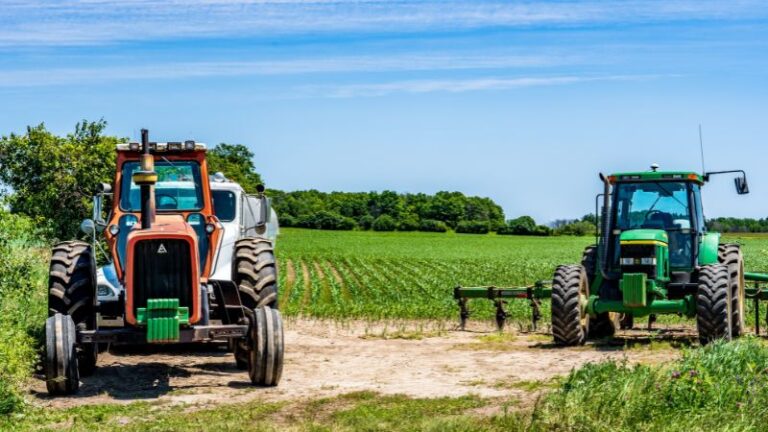
A small number of large manufacturers currently hold the dominant positions in autonomous farm equipment globally. John Deere remains the single most recognized name, having deployed fully autonomous tractor systems at commercial scale ahead of most competitors.
CNH Industrial, AGCO, and Kubota are the other primary incumbents investing heavily in autonomous platforms. Each has pursued a slightly different strategy—some through acquisition, others through internal R&D partnerships with technology firms.
Startups like Monarch Tractor and Sabanto have carved out early niches, particularly in specialty crop segments and retrofit solutions. Their agility gives them an edge in markets where large OEM platforms are too rigid or too expensive for smaller operations.
Market Growth Drivers and Adoption Trends
Three forces are accelerating adoption simultaneously: persistent labor shortages, falling sensor costs, and rising farm-level data sophistication. Together, these create a compelling economic case that did not exist even a decade ago.
Younger farm operators who grew up with smartphones and precision GPS are far more receptive to autonomous platforms than prior generations. This generational shift is quietly reshaping purchase decisions at the dealership level.
AI market research consistently identifies agriculture as one of the highest-growth verticals for applied machine intelligence. Autonomous tractors are a direct beneficiary of that broader investment wave.
Partially Autonomous vs Fully Autonomous Technologies
The market is not monolithic—it spans a wide spectrum from basic auto-steer systems to fully driverless field operations. Most commercially deployed units today sit in the partially autonomous category, assisting operators rather than replacing them entirely.
Fully autonomous systems require sophisticated sensor fusion, real-time obstacle detection, and robust fail-safe protocols before regulators and insurers will approve widespread use. The technology gap between the two tiers is narrowing rapidly, but it has not yet closed.
Partial autonomy currently accounts for the majority of market revenue, while fully autonomous platforms represent the fastest-growing segment by unit growth rate. Investors are watching the fully autonomous tier most closely for long-term return potential.
Power Output Segmentation and Equipment Categories
Autonomous tractor platforms are segmented primarily by horsepower output, with distinct market dynamics at each tier. Sub-100 HP units dominate the specialty crop and orchard segments, while 200+ HP platforms lead in broad-acre row crop applications.
The mid-range 100–200 HP category is the most contested, attracting both large OEMs and well-funded startups. This segment serves a wide variety of farm sizes and crop types, making it commercially attractive for volume sales.
Electric autonomous tractors are emerging as a distinct sub-category, particularly for lower-horsepower vineyard and vegetable farm applications. Battery range limitations currently constrain their use in high-acreage row crop settings.
Primary Agricultural Applications
Tillage, planting, and spraying represent the three highest-volume applications for autonomous tractor deployment today. These tasks are highly repetitive, GPS-mappable, and relatively forgiving of minor navigation errors—making them ideal candidates for early automation.
Harvesting remains the most technically complex application due to variable crop conditions, irregular terrain, and the high cost of errors. Autonomous harvesting platforms exist but have not yet achieved the reliability thresholds required for mainstream adoption.
Cover cropping and inter-row cultivation are gaining traction as autonomous applications, particularly among sustainability-focused operations. Zero-waste gardening principles increasingly intersect with precision autonomous field management at the farm scale.
Regional Market Leadership and Expansion
North America currently holds the largest share of global autonomous tractor deployments, driven by large farm sizes, high labor costs, and strong OEM dealer networks. The U.S. Corn Belt and Canadian prairies are the most active deployment regions.
Europe is the second-largest market, with particularly strong adoption in Germany, France, and the Netherlands. Regulatory frameworks in the EU are evolving to accommodate autonomous field equipment, though approval timelines vary significantly by member state.
Asia-Pacific represents the highest long-term growth potential, especially in Japan and Australia where aging farm populations and vast acreages create urgent automation demand. China’s domestic manufacturers are also investing heavily in autonomous platforms for their home market.
Labor Shortage Solutions and Rural Employment Impact
The rural labor shortage is one of the most powerful structural forces driving autonomous tractor adoption. Rural employment data shows that employment and labor force impacts have varied significantly by metropolitan status, age group, and race/ethnicity—revealing the uneven impacts of economic recession and recovery across rural and urban America.
Seasonal labor availability has become increasingly unreliable, forcing farm operators to seek technology-based alternatives for time-critical field operations. Autonomous systems can operate continuously across extended shifts without the constraints of human fatigue or availability.
The inability to reliably staff field operations during peak planting and harvest windows is now a primary purchase motivator for many large-scale producers. This urgency is compressing the typical technology adoption timeline considerably.
Cost-Benefit Analysis Over Equipment Lifecycle
The financial case for autonomous equipment must be evaluated over a full lifecycle, not just the purchase price. Upfront capital costs are higher, but the ongoing operational savings can be substantial when labor is properly accounted for.
According to RNA Automation’s analysis, the cost of two operators running two shifts per day totals £100,000 per year, while the first-year depreciation on an automated system is just £16,400 at a 10% rate over a 10-year expected lifecycle. That gap compounds significantly over time.
Fuel efficiency gains from precision path planning and reduced overlap also contribute meaningfully to the ROI calculation. Farms that have deployed autonomous systems consistently report measurable reductions in input costs per acre.
GPS and Sensor Technology Advancements
Modern autonomous tractors rely on a layered sensor architecture that combines RTK-GPS, LiDAR, stereo cameras, and radar to navigate safely and precisely. Each sensor type addresses different environmental conditions and failure modes.
RTK-GPS accuracy has improved to sub-inch precision in ideal conditions, enabling pass-to-pass consistency that manual operators simply cannot match. This precision directly reduces seed, fertilizer, and chemical overlap costs.
Machine learning market growth is directly accelerating sensor fusion capabilities. Algorithms trained on millions of field hours are now enabling autonomous systems to handle edge cases that previously required human intervention.
Integration with Farm Management Systems
Autonomous tractors generate enormous volumes of field data that must integrate cleanly with farm management software to deliver full value. Interoperability between hardware platforms and software ecosystems is now a critical purchasing criterion.
Leading platforms offer API connectivity to major farm management systems, enabling seamless data flow from field operations to agronomic decision-making tools. Farms that achieve this integration report faster, more confident decisions on inputs and timing.
Connectivity infrastructure—particularly rural broadband and cellular coverage—remains a practical bottleneck for real-time data transmission in many farming regions. Investment in rural connectivity is a prerequisite for realizing the full promise of connected autonomous equipment.
Barriers to Adoption Beyond Initial Investment
High purchase price is the most frequently cited barrier, but it is far from the only one. Operator training requirements, service network availability, and software update dependencies all create friction in the adoption process.
Trust is a significant psychological barrier, particularly among experienced operators who have spent decades developing their own field judgment. Convincing a skilled farmer to cede control to an algorithm requires demonstrated reliability over multiple seasons.
Connectivity gaps in rural areas remain a serious operational constraint for systems that depend on cloud-based processing or real-time remote monitoring. Manufacturers are increasingly designing for offline resilience to address this reality.
Government Incentives and Subsidy Programs
Several national and regional governments have introduced incentive programs specifically designed to accelerate autonomous agriculture adoption. These range from direct purchase subsidies to favorable depreciation schedules for precision equipment.
In the United States, USDA programs have increasingly recognized autonomous and precision agriculture equipment as eligible for cost-share assistance. European Common Agricultural Policy reforms are similarly moving to reward technology adoption that supports sustainability goals.
Farmers evaluating autonomous equipment should consult with their local agricultural extension office and equipment dealer to identify currently available incentive stacking opportunities. The combination of federal, state, and utility-based incentives can materially reduce net acquisition cost.
Cybersecurity and Data Privacy Considerations
Connected autonomous farm equipment creates new cybersecurity vulnerabilities that the agricultural sector is only beginning to address seriously. A compromised tractor fleet during planting season could cause catastrophic operational and financial damage.
Farm data—including field boundaries, yield maps, and input application records—has significant commercial value and must be protected accordingly. Farmers should carefully review data ownership clauses in any autonomous equipment or software subscription agreement before signing.
The FCC and equivalent international regulators are increasingly engaged with agricultural connectivity security as rural broadband infrastructure expands. Industry-wide data governance standards for autonomous farm equipment are actively under development.
Retrofit Economics vs New Equipment Purchase
Retrofit autonomy kits represent a compelling entry point for farms with existing equipment that is mechanically sound but technologically dated. These systems add GPS guidance, obstacle detection, and remote monitoring capabilities to conventional tractors at a fraction of new equipment cost.
The retrofit market has attracted a growing number of specialized vendors, creating competitive pricing and improving product quality. However, retrofit systems typically offer a narrower feature set and less integration depth than purpose-built autonomous platforms.
For operations with tight capital budgets, a phased retrofit approach can deliver meaningful labor savings while preserving cash flow for other investments. The key is selecting retrofit hardware with a clear upgrade path as technology matures.
Subscription and Service Model Structures
Many autonomous tractor manufacturers have shifted toward software-as-a-service pricing models that bundle features, updates, and support into recurring annual fees. This model lowers the upfront barrier but creates ongoing cost obligations that must be factored into multi-year financial planning.
Feature-gating—where hardware capabilities are unlocked through paid software subscriptions—has generated significant controversy among farm operators who feel they should own what they purchase outright. This tension is reshaping buyer expectations and influencing competitive positioning.
Understanding the full total cost of ownership, including mandatory service contracts and software subscription fees, is essential before committing to any autonomous platform. A lower sticker price can easily be offset by higher annual subscription obligations over a five-year horizon.
Future Outlook for Fully Autonomous Systems
The trajectory toward fully autonomous field operations is clear, but the timeline remains subject to technology, regulatory, and economic variables. Most industry observers expect fully driverless systems to achieve mainstream commercial viability within the next five to ten years in broad-acre applications.
Swarm robotics—where multiple small autonomous units work collaboratively across a field—is emerging as a potentially disruptive alternative to the traditional large-tractor model. This approach could fundamentally reshape the power output segmentation that currently defines the market.
The farms that invest now in autonomous-ready infrastructure—connectivity, data systems, and operator training—will be best positioned to capture the full productivity gains as the technology matures. The competitive advantage in agriculture is increasingly being built in the data layer, not just in the field.