Agricultural Robotics Adoption Rates & Trends (2026 Update)

Agricultural robotics adoption is reshaping how farms around the world operate, moving from experimental pilots to full-scale commercial deployment at a pace few industries have seen before. As labor shortages deepen, input costs rise, and climate pressures mount, farmers are turning to autonomous systems not as a luxury, but as a practical survival strategy. The shift is being felt across crop types, farm sizes, and continents, creating one of the most dynamic investment landscapes in modern agriculture.
Understanding the trends, barriers, and opportunities within this space is essential for any farmer, investor, or policymaker navigating the future of food production. From AI-guided harvesters to autonomous weeding robots, the technology is maturing rapidly—and the decisions made now will define farm competitiveness for decades to come. This guide breaks down every major dimension of the market, from cost analysis to regulatory frameworks, so you can make informed, confident decisions.
Current Market Growth and Adoption Trajectory
The agricultural robotics market is experiencing a period of accelerated expansion, driven by converging pressures across labor, technology, and food demand. Market analysts consistently point to this sector as one of agtech’s fastest-growing segments. Investment is flowing in from both private equity and government-backed innovation programs worldwide.
Early adoption was concentrated among large-scale operations with capital reserves to absorb upfront costs. That pattern is shifting as hardware prices fall and leasing models become more accessible to mid-sized farms. The trajectory now points toward broad, cross-sector deployment rather than niche experimentation.
Types of Agricultural Robots Transforming Farm Operations
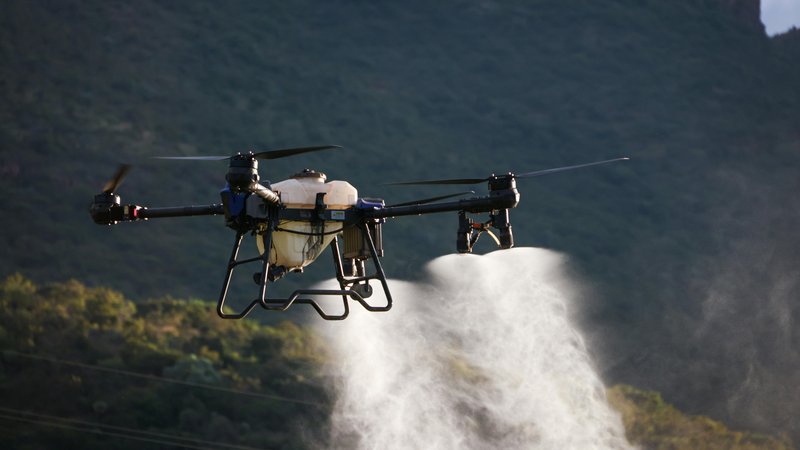
The category of agricultural robots is far broader than most farmers initially expect. It spans aerial drones for crop scouting, ground-based autonomous weeders, robotic harvesters, seeding machines, and livestock monitoring systems. Each type addresses a specific operational bottleneck with measurable precision.
Robotic harvesters have seen the most commercial traction in fruit and vegetable production, where hand-picking costs are highest. Autonomous weeders are gaining ground in row crops, dramatically reducing herbicide use. Multi-function platforms that can switch between tasks are emerging as the most cost-efficient option for diverse operations.
Key Applications Driving Adoption Across Farming Sectors
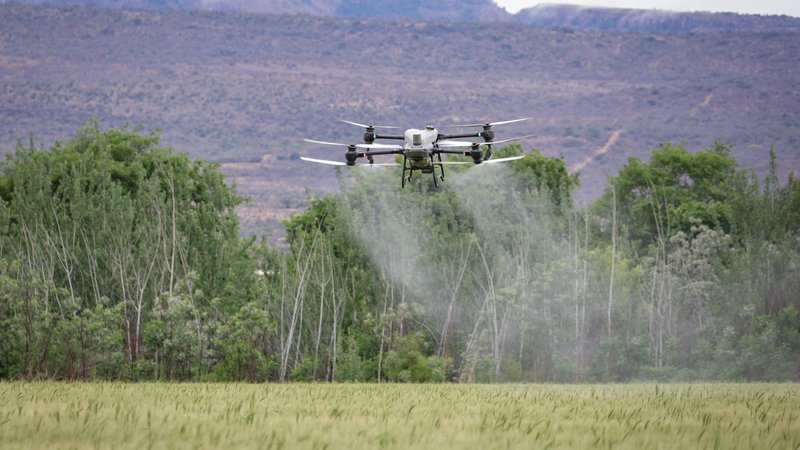
Precision spraying is one of the most widely adopted robotic applications, cutting chemical input costs while reducing environmental runoff. Soil sampling robots are enabling hyper-local fertility mapping that traditional methods cannot match. These applications deliver fast, measurable returns that make the business case easy to justify.
In livestock sectors, robotic milking systems have demonstrated strong ROI over multi-year periods. Poultry and aquaculture operations are increasingly deploying automated feeding and monitoring systems. Applications tied directly to recurring labor costs tend to show the fastest payback periods.
Cost-Benefit Analysis and ROI for Different Farm Sizes
Evaluating a robotics investment requires a structured approach that accounts for both direct savings and indirect operational benefits. As noted by farm cost management experts, the most successful farmers use multiple evaluation methods alongside qualitative factors like risk tolerance and long-term farm goals. Cost-benefit analysis is a tool to inform decisions, not replace sound farming judgment.
For smaller operations, the benefit-cost ratio method often proves more useful than net present value alone, since it normalizes returns relative to investment size. Farmers should factor in maintenance costs, software subscriptions, and potential downtime when projecting ROI. Pairing financial analysis with a clear understanding of your farm’s specific labor and yield challenges will produce the most reliable projections.
Also consider how shifting climate patterns may alter long-term cost-benefit calculations. A robot optimized for current weather conditions may need software or hardware updates as growing seasons change. Building climate adaptability into your ROI model is no longer optional—it is a fundamental planning requirement.
Integration Challenges with Existing Farm Infrastructure
Most farms were not designed with autonomous systems in mind, creating real friction during the integration process. Uneven terrain, legacy irrigation infrastructure, and inconsistent connectivity all create obstacles for robotic deployment. Infrastructure upgrades often represent a hidden cost that initial purchase quotes do not capture.
Connectivity is perhaps the most critical infrastructure gap, as many robots depend on reliable data transmission to function accurately. Farms in rural areas with poor cellular or broadband coverage face disproportionate integration challenges. Investing in on-farm connectivity infrastructure before deploying robots significantly reduces implementation friction.
Regulatory and Compliance Framework for Autonomous Systems
Regulation is one of the least discussed but most consequential factors shaping adoption timelines. As research published by Springer Nature confirms, legal structures may form barriers to, or enablers of, adoption of precision agriculture management with small autonomous agricultural robots. A clear regulatory framework is essential for scaling deployment confidently.
Rules governing airspace use, autonomous vehicle operation on public roads, and pesticide application via robotics vary significantly by country and region. Farmers must navigate this patchwork of rules before deploying systems at scale. Engaging with local agricultural extension services and legal advisors early in the planning process can prevent costly compliance failures.
Data Security and Privacy in Connected Agricultural Networks
Modern agricultural robots generate enormous volumes of data—soil conditions, yield maps, equipment performance, and field imagery. This data has significant commercial value, raising serious questions about who owns it and how it is protected. Farmers should carefully review data ownership clauses in software and service agreements before signing.
Cybersecurity vulnerabilities in connected farm systems are a growing concern as more devices join agricultural networks. A compromised system could disrupt planting schedules, misapply inputs, or expose sensitive operational data. Implementing robust network security protocols and working with vendors who prioritize data privacy is a non-negotiable baseline.

Labor Shortage as a Primary Adoption Catalyst
Chronic labor shortages in agriculture have become the single most powerful driver of robotics investment across all farm sizes. Seasonal worker availability has declined in many regions, while wages for available labor have risen sharply. Robotics increasingly functions not as a cost-cutting tool, but as a business continuity strategy.
Crops that require intensive hand labor—strawberries, asparagus, lettuce, and tree fruits—are experiencing the sharpest push toward automation. Growers who cannot find workers during peak harvest windows face catastrophic losses. Robotic systems that can operate continuously without rest or recruitment challenges are solving a problem that no other solution adequately addresses.
Regional Market Variations and Adoption Patterns
Adoption rates vary dramatically by geography, shaped by labor costs, land structure, government support, and technological infrastructure. North America, Europe, Japan, and Australia lead in deployment density, while emerging markets are accelerating rapidly. Government subsidy programs in several countries are directly funding robotic equipment purchases for qualifying farms.
In regions where farm sizes are small and fragmented, adoption faces structural headwinds that differ from large-scale commodity operations. Cooperative purchasing models and shared-use arrangements are emerging as solutions in these markets. Understanding your regional policy environment is as important as understanding the technology itself.
Leading Companies and Competitive Landscape
The competitive landscape spans global agricultural equipment giants and agile startups developing highly specialized solutions. Companies like Rooted Robotics and Terra Robotics are building purpose-built platforms for specific crop and terrain challenges. Meanwhile, AWA Agritech is advancing automation solutions tailored to regional farming needs.
Software and AI integration capabilities are increasingly the primary differentiator between competing hardware platforms. Farmers evaluating vendors should assess not just the robot’s physical performance, but the quality of its data analytics and ongoing software support. Long-term vendor viability is a critical purchasing criterion, given the multi-year investment horizon involved.
Custom software development also plays a growing role in making robots work within unique farm environments. Providers like Chetu agriculture tech offer tailored integration services that bridge the gap between off-the-shelf robotics and farm-specific operational requirements. This layer of customization is often what separates a successful deployment from a costly failure.
Training and Skill Development for Farmer Adoption
Technology is only as effective as the people operating it, and most farm workforces require significant upskilling to work alongside autonomous systems. Training programs offered by manufacturers vary widely in depth and accessibility. Farms that invest in structured, ongoing training programs see measurably better performance outcomes from their robotic systems.
Agricultural extension services and community colleges are beginning to fill the training gap with dedicated robotics and precision agriculture curricula. Peer-to-peer learning networks, where early adopters share operational insights, have also proven highly effective. Building internal expertise reduces dependency on vendor support and accelerates the return on investment.
Environmental Impact of Agricultural Robotics Manufacturing and Deployment
The environmental footprint of agricultural robots extends beyond their operational phase to include manufacturing, transport, and eventual disposal. Battery production for electric autonomous systems carries its own resource and emissions burden. A full lifecycle assessment is the most accurate way to evaluate the true environmental cost of any robotic system.
On the operational side, robots consistently reduce chemical inputs, soil compaction, and water waste compared to conventional machinery. These benefits compound over time and can contribute meaningfully to a farm’s sustainability profile. The net environmental picture is generally positive, but only when full lifecycle factors are honestly accounted for.
Adoption Barriers Beyond Cost: Cultural and Technical Literacy Factors
Price is often cited as the primary adoption barrier, but cultural resistance and technical unfamiliarity are equally significant obstacles. Many experienced farmers feel a deep skepticism toward systems they cannot intuitively understand or repair themselves. Trust in the technology—built through transparent performance data and reliable support—is the most underrated adoption driver.
Generational dynamics also play a role, with younger farm operators generally showing faster uptake than those with decades of established practice. Peer demonstration events, where skeptical farmers can observe robots working in real field conditions, consistently outperform marketing materials in changing minds. The human dimension of adoption deserves as much strategic attention as the technical one.
Understanding broader AI in agriculture trends can also help farmers contextualize robotics within a wider technological shift, making individual systems feel less alien and more like part of a coherent progression.
Supply Chain Resilience in Agricultural Robotics Production
The agricultural robotics supply chain depends heavily on semiconductors, precision sensors, and specialized actuators—components that have proven vulnerable to global disruption. Lead times for replacement parts can stretch to weeks or months, creating serious operational risk for farms that depend on robotic systems for critical tasks. Sourcing from vendors with robust spare parts inventories and regional service networks significantly mitigates this risk.
Manufacturers are responding by diversifying their supplier bases and designing systems with more interchangeable, commercially available components. Farmers should ask vendors directly about parts availability and service response times before committing to a purchase. Supply chain resilience should be weighted as heavily as performance specifications in any evaluation process.
Performance Comparison Across Crop Types and Climate Conditions
Not all robots perform equally across all crops, and climate conditions significantly affect operational reliability. Systems designed for flat, uniform terrain may struggle in hilly or irregularly shaped fields. Matching robot capabilities to your specific crop type and field geometry is essential for achieving projected performance outcomes.
Humidity, temperature extremes, and dust exposure all affect sensor accuracy and mechanical longevity. Farmers in harsh climates should prioritize systems with proven durability ratings in comparable conditions. Requesting field trial data from environments similar to your own is a reasonable and important demand to make of any vendor.
Long-Term Maintenance Costs and Equipment Lifecycle Management
The purchase price of a robotic system represents only a fraction of its total cost of ownership over a full operational lifecycle. Software licensing fees, sensor calibration, battery replacement, and structural maintenance all accumulate significantly over time. Total cost of ownership models that project expenses over five to ten years give a far more accurate financial picture than upfront price comparisons alone.
Preventive maintenance schedules dramatically extend equipment lifespan and reduce the risk of costly mid-season failures. Many manufacturers now offer remote diagnostics that can identify developing issues before they become operational emergencies. Building maintenance costs explicitly into your farm budget from day one prevents the financial surprises that derail many early adopters.
Precision Agriculture and Sustainability Benefits
Agricultural robots are among the most powerful tools available for advancing precision agriculture at scale. By applying inputs only where and when they are needed, robotic systems can reduce fertilizer use, pesticide application, and water consumption simultaneously. Farms using precision robotics consistently report input cost reductions alongside measurable improvements in yield quality.
These sustainability benefits are increasingly relevant to market access, as food retailers and processors impose stricter environmental standards on their supply chains. Robotic data logs can provide the verifiable evidence needed to meet these standards and access premium markets. Sustainability and profitability are no longer competing goals—precision robotics is making them mutually reinforcing.
AI and Machine Learning Integration in Modern Farm Robots
Artificial intelligence is the engine that transforms a mechanical robot into a genuinely intelligent farm tool. Machine learning models enable robots to distinguish between crop plants and weeds, identify disease symptoms, and adapt their behavior based on real-time field data. The quality of a robot’s AI layer is now the primary determinant of its operational value in complex, variable field conditions.
Continuous learning systems that improve with each season of operation offer compounding value over time. Farmers who share anonymized data with manufacturers often benefit from model improvements that enhance their own system’s performance. The intersection of robotics and AI is where the most transformative agricultural innovation is currently happening—and it is accelerating.
Vertical Farming Automation and Controlled Environment Agriculture
Vertical farming and controlled environment agriculture represent a distinct but rapidly growing frontier for agricultural robotics. In these settings, robots operate in structured, predictable environments that dramatically simplify navigation and task execution. Automation rates in vertical farming facilities often exceed those seen in field agriculture, precisely because the environment can be engineered around the robot’s capabilities.
Transplanting, harvesting, and quality inspection robots are now standard in leading vertical farming operations. The economics of these systems are particularly compelling given the high land and energy costs associated with controlled environment production. As vertical farming scales globally, robotics will be inseparable from its operational model.
Future Outlook for Agricultural Robotics Innovation
The trajectory of agricultural robotics points toward systems that are smaller, smarter, more affordable, and more deeply integrated with farm management platforms. Swarm robotics—where many small robots collaborate on a single task—is moving from research labs toward commercial viability. The farms that begin building operational experience with robotics now will hold a significant competitive advantage as the technology matures.
Interoperability between robots from different manufacturers, enabled by open data standards, will unlock new levels of flexibility for farm operators. Policy environments are gradually adapting to support autonomous systems, though the pace of regulatory change varies considerably by region. The foundational decisions being made across the industry today—about standards, data ownership, and training—will shape the entire sector for generations.
For farmers thinking about long-term operational resilience, robotics is not a standalone investment—it is part of a broader transition toward data-driven, resource-efficient farming. Exploring complementary practices like zero-waste gardening can reinforce the sustainability gains that precision robotics makes possible. The future of farming belongs to those who integrate technology thoughtfully, with clear goals and a long-term perspective.